

Kempegowda Airport Bangalore Jobs: Opportunities for Aviation Diploma Holders
Admissions Started
Book your seat Now!
- AIRPORT MANAGEMENT
- LOGISTICS & SUPPLY CHAIN MANAGEMENT
- HOSPITAL ADMINISTRATION
- DIPLOMA & PG DIPLOMA
- 6 MONTHS & 1 YEAR
Kempegowda Airport Bangalore Jobs: Opportunities for Aviation Diploma Holders
Kempegowda Airport Bangalore jobs are a common search for students who have completed, or are planning to complete, an aviation diploma. The honest answer is that an aviation diploma can prepare you for several categories of roles connected to Bengaluru's airport ecosystem, but it helps to understand exactly who hires for these roles before you start applying.
Can Aviation Diploma Holders Apply for Bangalore Airport Jobs?
Yes, aviation diploma holders can apply for many entry-level roles connected to Kempegowda International Airport (BLR), but not by applying "to the airport" as a single employer.
Kempegowda International Airport is operated by Bangalore International Airport Limited (BIAL). BIAL manages the airport's infrastructure, planning, and operations at a broader level, but most of the passenger-facing and operational jobs you'll see advertised are actually run by separate companies working within the airport: airlines, ground handling agencies, cargo operators, and retail or hospitality concessionaires. Each of these hires independently, with its own eligibility criteria, application process, and vacancy cycle.
So the more accurate question isn't "Does the airport hire aviation diploma holders?" — it's "Which of the companies operating at the airport are hiring for roles that match an aviation diploma background?" That distinction matters because it changes where and how you should be looking for openings.
An aviation diploma is relevant training for several of these roles, but it is not a blanket qualification. Eligibility always depends on the specific employer and the specific vacancy.
What Types of Jobs Can Aviation Diploma Holders Explore at Bangalore Airport?
Airport employment at a hub like BLR falls into a few broad categories. Here's how they typically break down:
Passenger Service & Airport Operations Support
Typical responsibilities: Assisting passengers at terminals, providing information, supporting check-in counters, and helping with wayfinding or general terminal queries. Useful skills: Clear communication, patience under pressure, basic English proficiency, grooming, and presentation. Why aviation training is relevant: Diploma programs typically cover airport terminology, passenger flow, and customer-service protocols specific to aviation, which gives candidates a head start over generalist customer-service applicants.
Ground Operations
Typical responsibilities: Supporting ground handling teams with tasks like baggage-related coordination, ramp-area support, and liaison between airline staff and ground crews. Useful skills: Physical stamina, teamwork, ability to follow safety protocols, basic operational awareness. Why aviation training is relevant: Ground operations at BLR are run by licensed ground handling companies. Bangalore International Airport Limited (BIAL) recently awarded a long-term ground handling license to Menzies Aviation, covering passenger, ramp, and baggage services across the airport's terminals. This is the kind of company where ground-operations-related roles typically originate, rather than through BIAL itself.
Cargo & Logistics
Typical responsibilities: Supporting cargo documentation, warehouse coordination, and freight movement processes. Useful skills: Attention to detail, basic computer literacy, understanding of logistics documentation. Why aviation training is relevant: BLR has become one of India's larger air cargo hubs, and companies such as AISATS (Air India SATS) operate dedicated cargo and logistics infrastructure at the airport, including a large on-airport logistics park. Diploma programs that cover logistics fundamentals alongside aviation give candidates useful crossover knowledge for these roles.
Airline-Related Roles
Typical responsibilities: Depending on the airline's own hiring, roles may include ground staff, reservation and ticketing support, or airline customer service. Useful skills: Communication, customer handling, familiarity with airline processes and terminology. Why aviation training is relevant: These roles are hired directly by individual airlines, not the airport operator. Airlines typically look for candidates who already understand airport workflows, which is where aviation-focused training is useful, but exact eligibility (age, language skills, prior experience) varies from airline to airline.
Hospitality & Airport Services
Typical responsibilities: Guest services, food and beverage operations, and retail support within terminal premises. Useful skills: Customer service, presentation, basic sales or service orientation. Why aviation training is relevant: Some diploma programs include hospitality modules, which are relevant here, though these roles are usually hired by the specific retail or F&B concessionaire operating in the terminal, not the airport itself.
A note on eligibility: Exact job titles, qualifications, age limits, and selection criteria differ by employer and by vacancy. Nothing above should be read as a guarantee that a specific company is currently hiring or will accept a given candidate.
Why Is an Aviation Diploma Useful for Airport Careers?
An aviation diploma doesn't replace an employer's own selection process — it builds the foundation that makes you a more prepared candidate when you apply.
Training Area | How It Helps |
Airport Operations | Understanding how terminals, check-in, and ground processes actually function |
Communication | Practising the kind of passenger interaction airport and airline roles require |
Customer Service | Handling traveller queries and complaints professionally |
Aviation Knowledge | Understanding industry terminology used in job descriptions and interviews |
Professional Etiquette | Grooming, workplace behaviour, and presentation standards common in aviation |
Computer Skills | Basic administrative and system-based tasks used in operational roles |
Not every employer requires every item on this list; the table shows what a diploma can contribute, not a checklist every recruiter demands.
Skills Employers Look for in Airport Job Candidates
Beyond formal qualifications, employers in the airport ecosystem commonly assess:
Communication and English proficiency
Customer-service orientation
Grooming and professional presentation
Basic computer skills
Teamwork and ability to work in shifts
Time management, especially in operational roles
Problem-solving under time pressure
Adaptability and professional behaviour in a public-facing environment
It's worth separating two things clearly:
Skills that improve employability, communication, presentation, customer handling — are things training can genuinely strengthen.
Formal eligibility requirements, minimum educational qualification, age limits, specific certifications, sometimes prior experience, are set by each employer and vacancy, and no training programme can override them.
Airport Jobs in Bangalore for Freshers
If you're a fresher, a few things are worth keeping in mind:
Entry-level roles at airlines, ground handlers, and cargo companies do hire freshers, but requirements vary: some prefer candidates with at least basic aviation-related training, others may accept any graduate with strong communication skills.
Role-specific eligibility (age, height/fitness for certain roles, language skills) matters more than the diploma alone.
Training improves preparedness for interviews and assessments, but doesn't remove the need to meet an employer's specific criteria.
A fresher's resume should highlight relevant training, communication skills, any internships or industrial visits completed during your course, and willingness to work in shifts.
Interview preparation should focus on clear communication, basic aviation knowledge, and a realistic understanding of the role you're applying for, not rehearsed generic answers.
How to Start an Aviation Career in Bangalore After 12th
A typical pathway looks like this:
12th standard → Aviation-focused training (diploma/certificate) → Skill development (communication, computer literacy, operational knowledge) → Apply to suitable airport/aviation employers → Employer-specific selection process → Career progression within the role
This is a general pathway, not a fixed sequence. The actual steps, timelines, and requirements vary depending on the specific role and employer you're targeting.
What Should You Look for in an Aviation Diploma Course?
Since the diploma is your foundation, it's worth evaluating a course properly before enrolling:
Curriculum relevance: does it cover airport operations, ground handling basics, communication, and customer service, not just theory?
Practical exposure: industrial visits, mock airport setups, or hands-on modules
Communication training: spoken English and interview preparation, since this is consistently cited as an employability factor
Faculty background: instructors with real industry experience
Career guidance and placement assistance: whether the institute actively supports job search, resume building, and interview readiness (without assuming this means guaranteed placement)
Internship opportunities, where offered
Location and convenience: relevant if you plan to work in a specific city like Bangalore
Verifiable outcomes: check actual student placements or alumni feedback rather than general claims
Studying Aviation in Bangalore or Kerala?
Students planning a Bangalore-based aviation career sometimes assume they must train in Bangalore itself. That's not strictly necessary; what matters more is the quality and relevance of the training.
Kairos Institute has branches in Bangalore, Kochi, and Thodupuzha (Kerala). Students from Kerala who are aiming for aviation careers in Bangalore may choose to train at a Kerala branch closer to home before applying for roles in Bangalore, or train directly at the Bangalore branch if they prefer to build local familiarity and networks early. Both are reasonable choices depending on your convenience, budget, and how soon you plan to relocate.
How Kairos Institute Can Help You Prepare for an Aviation Career
Kairos Institute's aviation diploma programs are built around the training areas discussed above: airport operations knowledge, communication, customer service, and professional etiquette, with the goal of making students better-prepared candidates for the categories of roles outlined in this article.
This means: training → relevant skills → career preparation → your own job search and applications. Kairos does not place students directly into specific employers such as BIAL, AISATS, Menzies Aviation, or individual airlines, and no training institute can guarantee a job at a named airport or company. What a good course can do is reduce the preparation gap between where you are now and what these employers are actually looking for. If you're evaluating your options, take a look at these aviation courses in Bangalore to see which program fits your background and target city.
Not sure which aviation course matches your career goal? Speak with the Kairos Institute team to understand which program fits your background and target city.
Tips Before Applying for Bangalore Airport Jobs
Read the vacancy description carefully. Job titles like "ground staff" can mean different things at different companies
Check eligibility (education, age, language, sometimes height/fitness for certain roles) before applying
Prepare a clear, professional resume focused on relevant skills and training
Work on spoken English and interview communication in advance
Understand what the role actually involves before the interview, not just the job title
Verify the employer independently; check official websites or LinkedIn pages for the company name mentioned in the job post
Never pay unofficial "recruitment fees" or "registration charges" to agents claiming guaranteed airport jobs
Where possible, check official recruitment channels or the company's verified careers page rather than relying solely on third-party job boards
FAQs About Kempegowda Airport Bangalore Jobs
Can aviation diploma holders apply for Kempegowda Airport jobs?
Yes, for roles offered by airlines, ground handling companies, cargo operators, and terminal service providers operating at the airport — eligibility depends on the specific employer and vacancy.
What jobs can I get after an aviation diploma in Bangalore?
Common categories include passenger service, ground operations support, cargo and logistics roles, airline customer service or ticketing-related roles, and hospitality/retail roles within the terminal.
Are there airport jobs for freshers in Bangalore?
Yes, many entry-level roles across airlines, ground handlers, and cargo companies are open to freshers, though specific requirements vary by employer.
Is an aviation diploma enough to get an airport job?
A diploma builds relevant knowledge and skills, but employers also assess communication ability, presentation, and interview performance. It's a strong preparation step, not an automatic qualification.
What skills are required for airport jobs?
Communication and English proficiency, customer-service ability, professional presentation, basic computer skills, and adaptability to shift-based work are commonly expected.
Can students from Kerala study aviation and apply for jobs in Bangalore?
Yes. Students can train at a Kerala branch or a Bangalore branch and then apply to Bangalore-based employers location of training does not restrict where you can apply for jobs.
Which aviation course is suitable for airport careers?
Look for a course that combines airport operations knowledge, communication training, and practical exposure, rather than one focused only on theory.
Does an aviation diploma guarantee a job at Bangalore Airport?
No qualification can guarantee a specific employer or airport job. Selection always depends on the employer, the specific vacancy, eligibility criteria, and the recruitment process at the time you apply.
Planning an aviation career in Bangalore? Contact Kairos Institute to understand the available course options, eligibility, training structure, and career guidance.
Popular Blogs
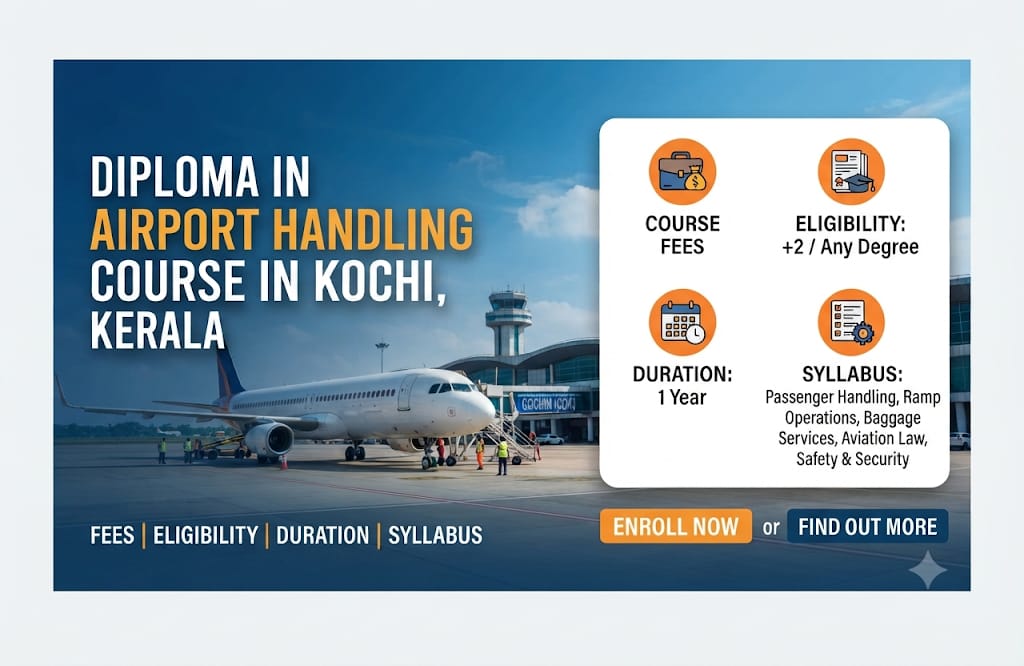
Diploma in Airport Handling Course in Kochi, Kerala: Fees, Eligibility, Duration & Syllabus
Read More
Diploma in Warehouse Management Course in Kochi, Kerala: Fees, Eligibility, Duration & Syllabus
Read More
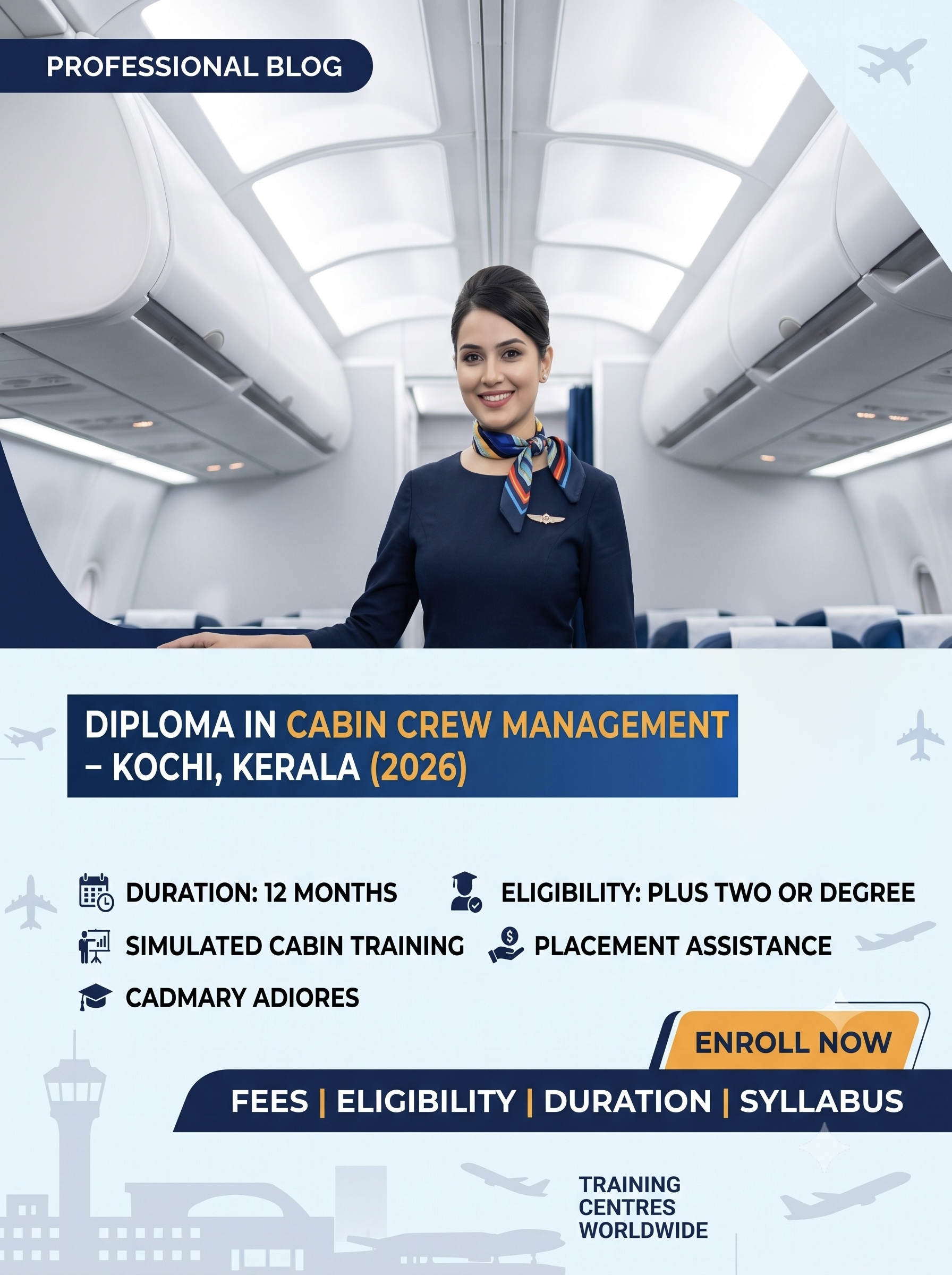
Diploma in Cabin Crew Management Course in Kochi, Kerala: Fees, Eligibility, Duration & Syllabus (2026)
Read More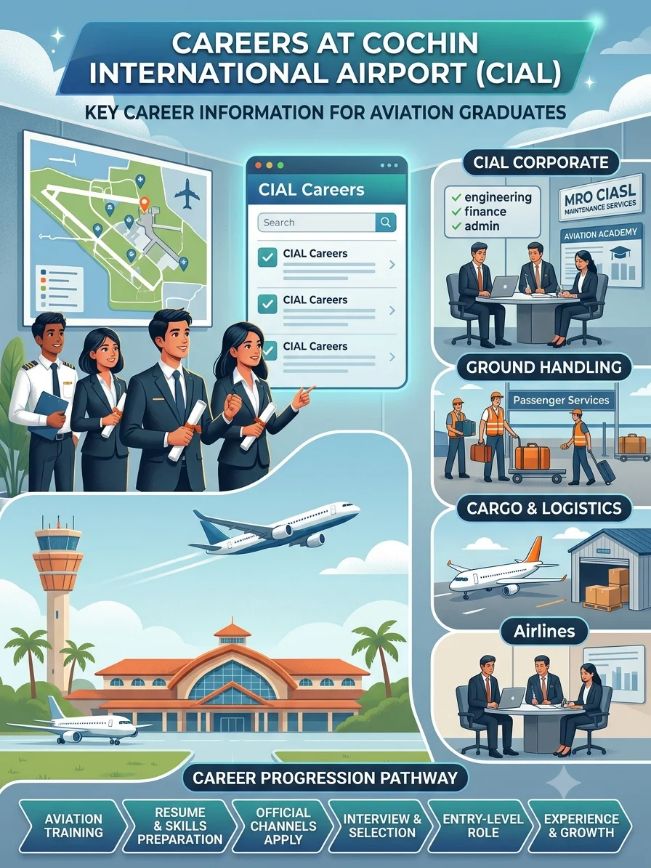



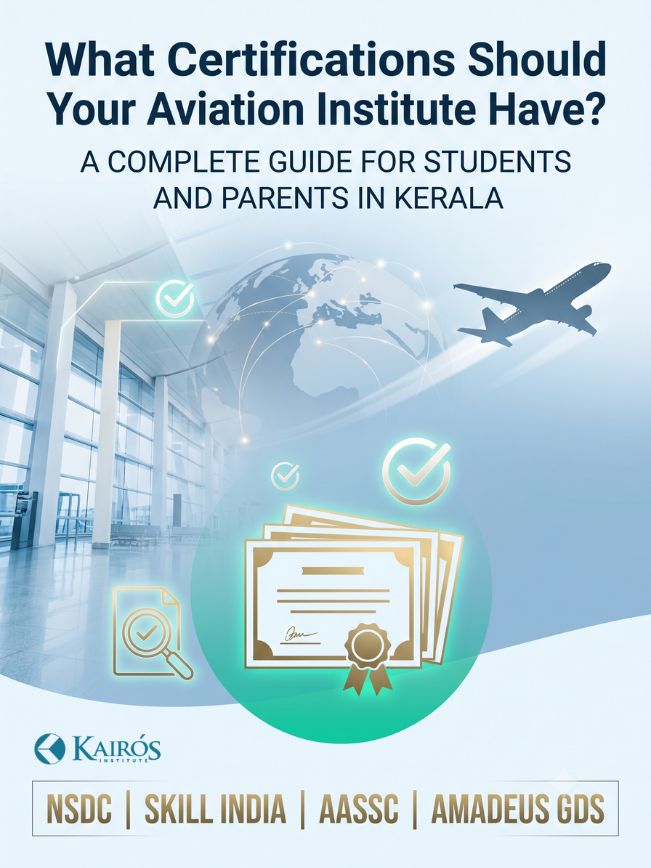
What Certifications Should Your Aviation Institute Have? A Complete Guide for Students and Parents in Kerala
Read More



How AI and Automation Are Changing Airport Jobs in 2026 — and What It Means for Your Career
Read More
What Is Virtual Reality Training in Aviation? How Kairos Institute Uses VR for Student Learning
Read More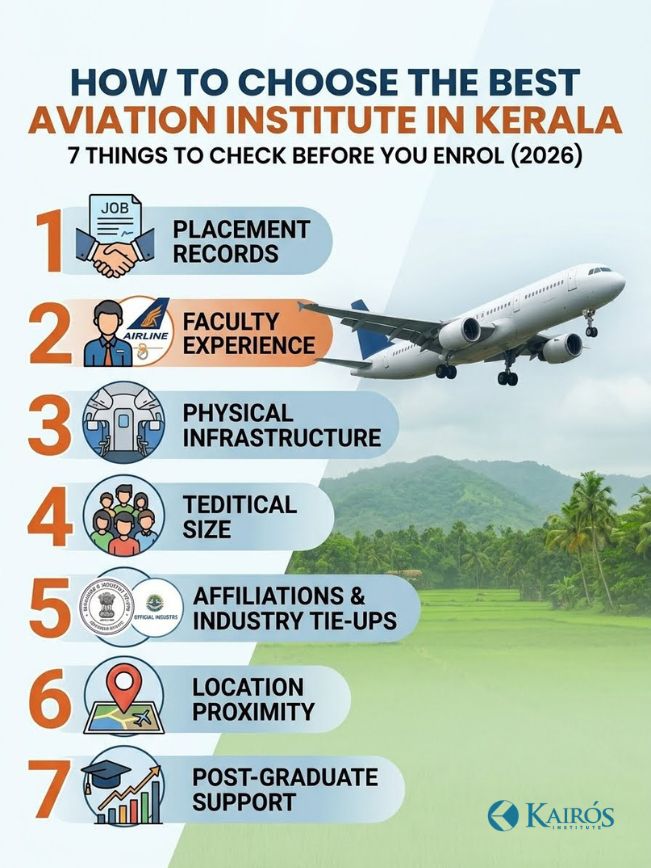
How to Choose the Best Aviation Institute in Kerala — 7 Things to Check Before You Enrol (2026)
Read More