
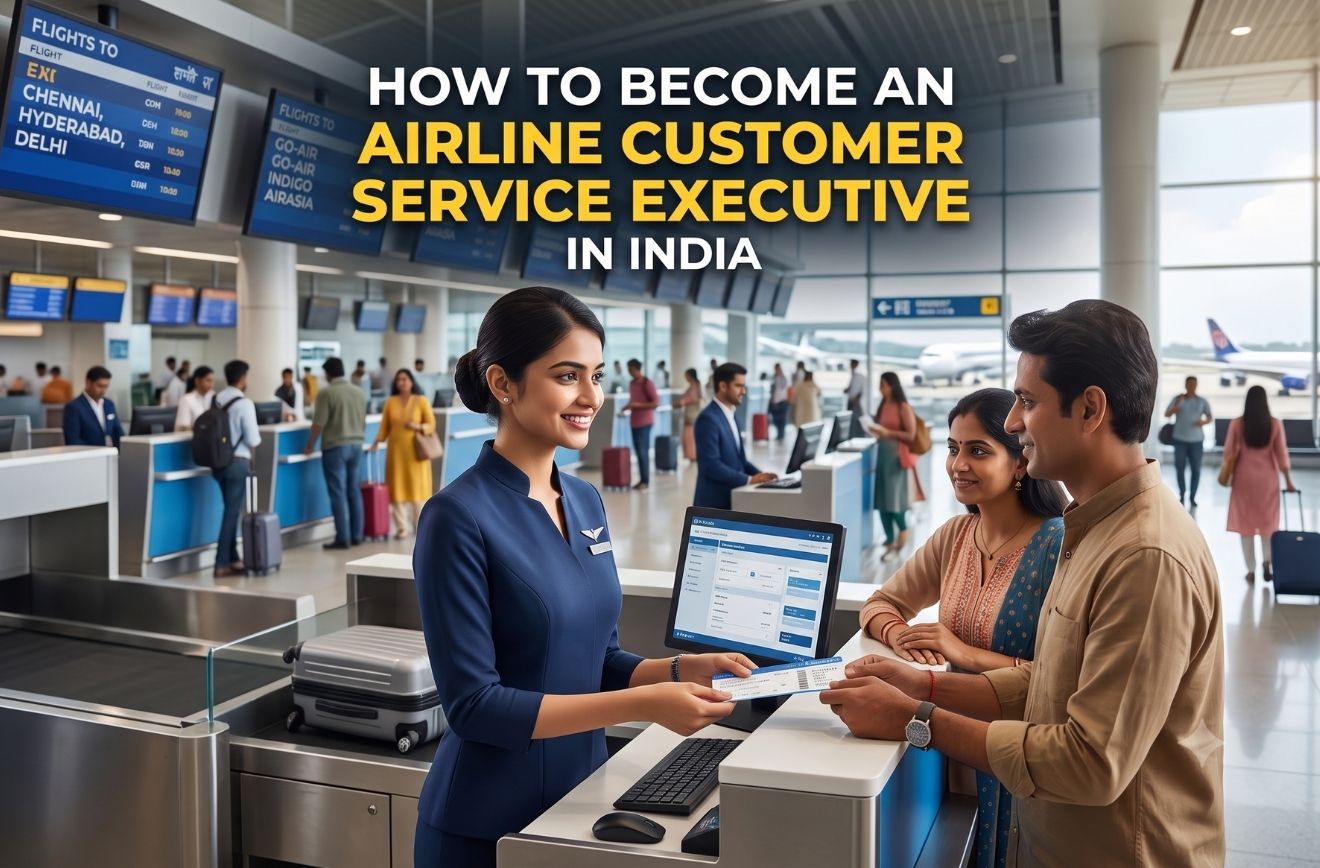
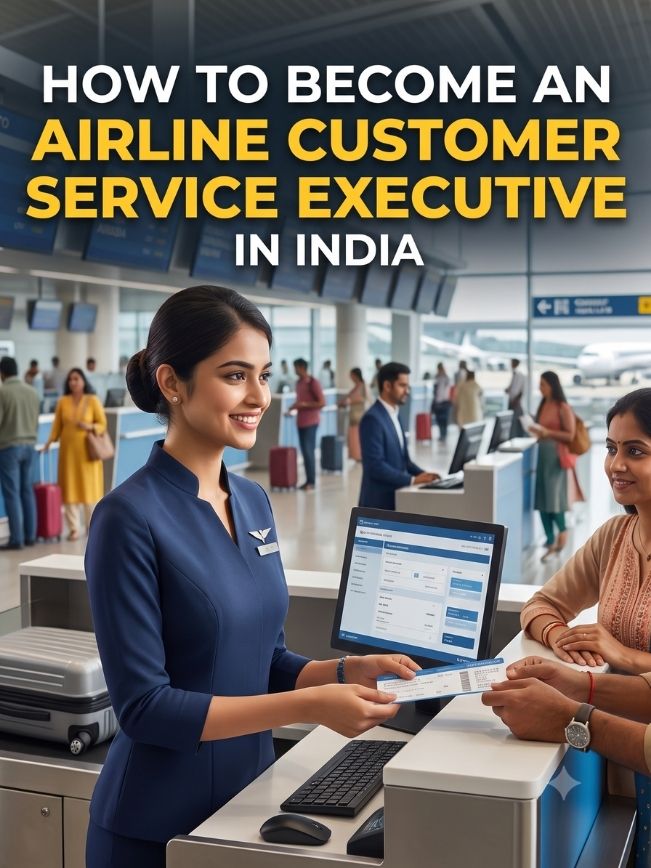
How to Become an Airline Customer Service Executive in India
Admissions Started
Book your seat Now!
- AIRPORT MANAGEMENT
- LOGISTICS & SUPPLY CHAIN MANAGEMENT
- HOSPITAL ADMINISTRATION
- DIPLOMA & PG DIPLOMA
- 6 MONTHS & 1 YEAR
An airline customer service executive is one of the most common entry points into India's aviation industry, and if you're researching how to become one, this article walks through the actual role, the realistic qualification requirements, and the step-by-step path to get there.
What Does an Airline Customer Service Executive Do?
An airline customer service executive supports passengers before, during, and after their journey, but the exact duties depend heavily on the employer.
Depending on the airline, ground handling company, or airport, responsibilities may include:
Assisting passengers with check-in-related queries
Supporting boarding processes
Answering questions about flights, schedules, and travel documents
Helping with baggage-related concerns
Handling passenger complaints and service issues
Coordinating with ground handling or airport operations teams when needed
Not every executive does all of these. Some roles are counter-based, some are more phone/email-based (call centre or reservations support), and some combine both. Always check the specific job description rather than assuming a fixed set of duties.
Airline Customer Service Executive vs Ground Staff vs Cabin Crew
Students frequently mix these up, so it's worth separating them clearly.
Role | Main Focus |
Airline Customer Service Executive | Passenger-facing service, queries, check-in support, complaint handling, often at counters or via phone/email |
Ground Staff | Broader airport-side operational and passenger support, sometimes overlapping with customer service duties |
Cabin Crew | Passenger service and safety onboard the aircraft |
Airport Operations Staff | Operational coordination across airport functions |
Reservation/Ticketing Staff | Booking, fare, and travel-document support, often via GDS systems |
Job titles and exact responsibilities vary between employers, one airline's "customer service executive" may look like another's "ground staff" role. Always read the actual job description rather than relying on the title alone.
How to Become an Airline Customer Service Executive in India
Step 1: Complete the Required Education
Most employers expect at least a 12th-standard pass; some prefer or require a graduate degree, particularly for airline-direct roles. Requirements differ by employer, so this isn't a fixed rule.
Step 2: Build Relevant Aviation Knowledge
Understanding airport terminology, passenger workflows, and airline processes makes you a stronger candidate. A Diploma in Airline & Airport Management is one way students build this knowledge, though it's not the only path — some candidates enter with just a relevant degree and strong communication skills.
Step 3: Develop Communication and Customer-Service Skills
Since the role is passenger-facing, clear spoken English, patience, and the ability to de-escalate service issues matter as much as (sometimes more than) formal qualifications.
Step 4: Prepare Your Resume
Highlight any aviation-related training, communication skills, prior customer-service exposure (even in unrelated industries), and willingness to work rotating shifts.
Step 5: Search for Relevant Vacancies
Look directly at airline career pages, ground handling company listings, and verified job portals. Cross-check the employer name independently before applying.
Step 6: Prepare for the Selection Process
Most processes include a resume screen, an interview, and sometimes a communication or scenario-based assessment. The exact format varies by employer.
Step 7: Start the Role and Build Experience
Entry-level performance and consistency typically matter more for progression than the qualification you started with.
What Qualification Do You Need to Become an Airline Customer Service Executive?
Minimum qualification: Usually 12th standard pass, though this varies by employer
Preferred qualification: A graduate degree is preferred (sometimes required) by several airlines and larger employers
Relevant training: An aviation-focused diploma or certificate, while not universally mandatory, is commonly held by candidates who enter this field
Employer-specific requirements: Age limits, language skills, and sometimes prior experience, these differ by company and role
It helps to think of this as three separate layers, minimum eligibility, what's preferred, and what improves your employability, rather than one fixed checklist.
Is an Aviation Diploma Necessary for Airline Customer Service Jobs?
Not for every vacancy, but it can meaningfully help.
An aviation diploma is not a universal requirement across every airline or employer. Some candidates are hired based on graduation, strong communication skills, and interview performance alone. That said, an aviation-focused course can give you:
Structured knowledge of airport and airline operations
Familiarity with terminology used in job descriptions and interviews
Practice in passenger-handling scenarios
Communication and grooming preparation specific to the industry
In short: it's not mandatory everywhere, but it does close a real preparation gap for candidates without prior industry exposure.
Skills You Need to Become an Airline Customer Service Executive
Skill | Why It Matters |
Communication | Directly used in every passenger interaction |
English | Required for most airline and workplace communication |
Customer Service | Core of the role — handling queries and complaints |
Problem Solving | Needed when passengers face delays, missed connections, or disputes |
Computer Skills | Used for airline systems, check-in tools, and documentation |
Teamwork | Coordination with ground handling, security, and operations teams |
Professional Etiquette | Grooming and behaviour standards expected in customer-facing airline roles |
What Is the Selection Process for Airline Customer Service Jobs?
A typical process looks like this:
Application → Resume screening → Interview → Communication/scenario assessment (where applicable) → Employer selection → Joining and initial training
The actual recruitment process varies by airline, ground handling company, airport service provider, and specific vacancy — some skip the assessment stage entirely, others add a group discussion round.
How Should Freshers Prepare for an Airline Customer Service Interview?
Research the specific employer, airline, ground handler, or service provider — before the interview
Understand what the actual role involves, not just the job title
Practise responding to common passenger-service scenarios (delayed flight, lost baggage, upset customer)
Work on clear, confident spoken English
Prepare a short, honest professional introduction
Dress in line with standard airline/customer-service grooming expectations
Be ready to discuss how you've handled teamwork or pressure before, even outside aviation
Avoid memorised, generic answers, interviewers can usually tell
Career Growth After Becoming an Airline Customer Service Executive
Entry-level customer service role → experienced customer service/ground operations role → senior or supervisory responsibilities → team leader/airport service management → operations or management opportunities
Progression depends on your performance, experience, the specific employer, and sometimes additional qualifications or internal opportunities — it isn't a fixed timeline, and not everyone follows the same route.
Is Airline Customer Service a Good Career for Freshers?
Potential advantages:
A genuine entry point into the aviation industry
Direct customer-facing experience that's transferable to other industries
Exposure to airport/airline operations
Possible progression into supervisory or operations roles over time
Considerations:
Shift-based work, including nights, weekends, and holidays
Passenger-facing pressure, especially during delays or disruptions
Physical demands depending on the role (standing, movement at counters)
Requirements and expectations differ significantly by employer
Whether it's "good" depends on your comfort with shift work and public-facing pressure — it suits some candidates far more than others.
How an Aviation Course Can Prepare You for Airline Customer Service
A well-structured aviation course typically covers:
Aviation and airport fundamentals
Airport operations and passenger workflows
Passenger handling and service scenarios
Communication and English proficiency
Professional etiquette and grooming
Interview preparation
General industry awareness
This builds readiness — it does not, on its own, guarantee placement with any specific airline or employer.
Aviation Training at Kairos Institute
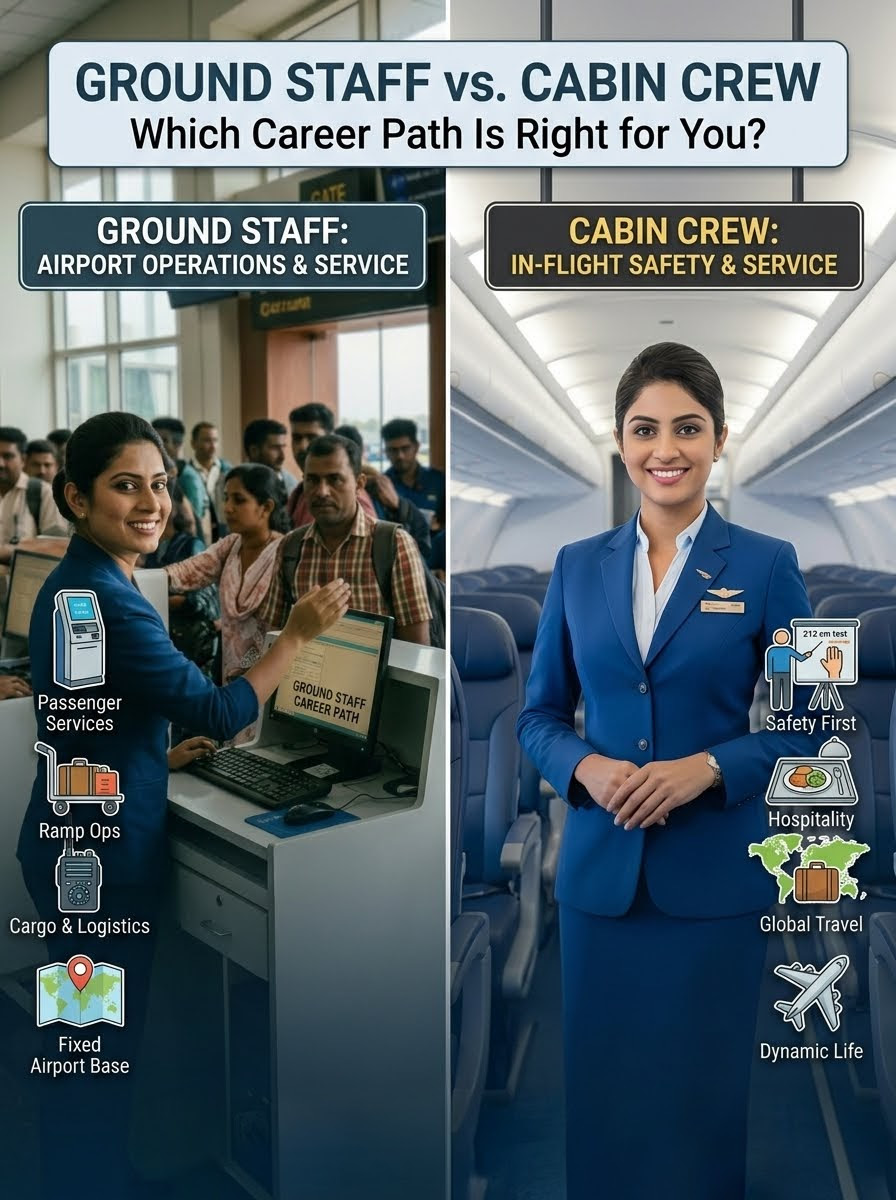
Kairos Institute has branches in Bangalore, Kochi, and Thodupuzha, Kerala. Programs relevant to this career path include the Diploma in Airline & Airport Management for students focused on airport-side operations and customer service, and the Diploma in Airfare & Ticketing Management for those more interested in the reservation and booking side of airline customer service. Students who are instead drawn to onboard passenger service can explore the Diploma in Cabin Crew Management, a related but distinct career path, as covered in the comparison above.
These programs are built around knowledge, communication, and professional-skill development, the goal is career preparation, not a guarantee of placement with a specific airline.
Not sure whether an aviation course is the right starting point for you? Speak with the Kairos Institute team about your career goals.
How to Choose the Right Aviation Course for an Airline Customer Service Career
Whether you're considering Kairos or another institute, evaluate any course against the same checklist:
Curriculum relevance to customer service and airport/airline operations
Course duration and structure
Practical exposure (mock scenarios, industrial visits)
Communication and English training
Customer-service-specific training, not just general aviation theory
Faculty with real industry background
Career guidance and interview preparation
Genuine placement assistance (understand what this actually includes)
Internship opportunities, where offered
The qualification awarded and its recognition
Total cost and what it covers
Location — students in Kerala can explore training through the Aviation Institute in Kerala covering the Kochi and Thodupuzha branches, while those based in or targeting Karnataka can look at the Bangalore aviation institute option
Want to build the aviation and customer-service skills employers look for? Explore the relevant aviation training options at Kairos Institute.
Final Career Roadmap
12th → Aviation education/training → Communication & customer-service skills → Resume → Apply → Interview → Selection → Airline/airport customer service role → Experience → Career progression
The exact pathway — and how long each stage takes — differs by employer, city, and individual circumstances.
FAQs
How can I become an airline customer service executive after 12th?
By meeting the employer's minimum qualification (often 12th pass), building relevant communication and aviation knowledge — through a course or self-study — and applying directly to airlines, ground handlers, or service providers.
What qualifications are required for airline customer service jobs?
This varies by employer. Many accept 12th pass as the minimum; several prefer or require graduation. Always check the specific job listing.
Is an aviation diploma necessary for airline customer service?
Not universally required, but it can build relevant knowledge and interview readiness, especially for candidates without prior industry exposure.
Can freshers apply for airline customer service jobs?
Yes, many entry-level roles are open to freshers, though specific eligibility and preferences vary by employer.
What skills are required for an airline customer service executive?
Communication, English proficiency, customer-service ability, problem-solving, basic computer skills, teamwork, and professional presentation.
Is English required for airline customer service jobs?
Yes, in most cases, since the role involves direct passenger and workplace communication, the required proficiency level can vary by employer.
What is the difference between airline customer service and cabin crew?
Customer service executives typically work on the ground (counters, phone, email); cabin crew work onboard the aircraft. They require overlapping but distinct skill sets and separate selection processes.
What is the difference between airline customer service and ground staff?
The two roles can overlap significantly depending on the employer. "Ground staff" often covers a broader range of airport-side operational duties, while "customer service executive" is more specifically passenger-facing.
What does an airline customer service executive do?
Assists passengers with check-in, boarding, queries, baggage concerns, and complaint resolution, the specific mix depends on the employer.
Is airline customer service a good career?
It can be a strong entry point into aviation with genuine transferable skills, but it involves shift work and passenger-facing pressure that doesn't suit everyone.
Can an aviation course help me get an airline customer service job?
It can improve your preparation and interview readiness, though it doesn't guarantee placement with any specific employer.
What are the career options after airline customer service experience?
Progression can lead toward senior customer service roles, team leadership, ground operations, or broader airport/airline operations and management roles over time.
Planning to start an airline customer service career in India?
Contact Kairos Institute in Bangalore, Kochi, or Thodupuzha to understand the available aviation courses, eligibility, and career preparation options.
Popular Blogs
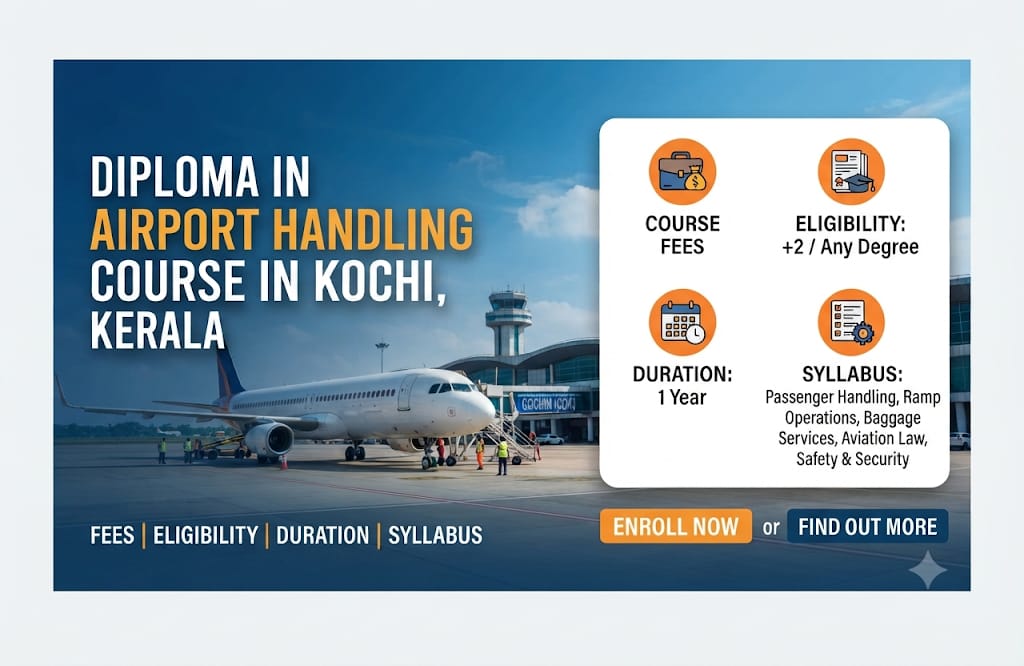
Diploma in Airport Handling Course in Kochi, Kerala: Fees, Eligibility, Duration & Syllabus
Read More
Diploma in Warehouse Management Course in Kochi, Kerala: Fees, Eligibility, Duration & Syllabus
Read More
Diploma in Cabin Crew Management Course in Kochi, Kerala: Fees, Eligibility, Duration & Syllabus (2026)
Read More
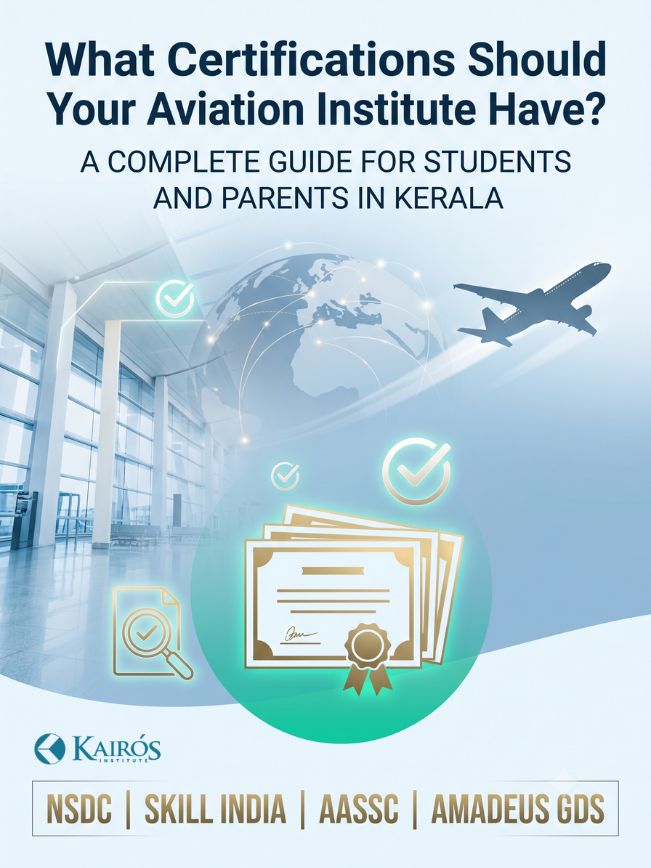
What Certifications Should Your Aviation Institute Have? A Complete Guide for Students and Parents in Kerala
Read More

How AI and Automation Are Changing Airport Jobs in 2026 — and What It Means for Your Career
Read More
What Is Virtual Reality Training in Aviation? How Kairos Institute Uses VR for Student Learning
Read More