
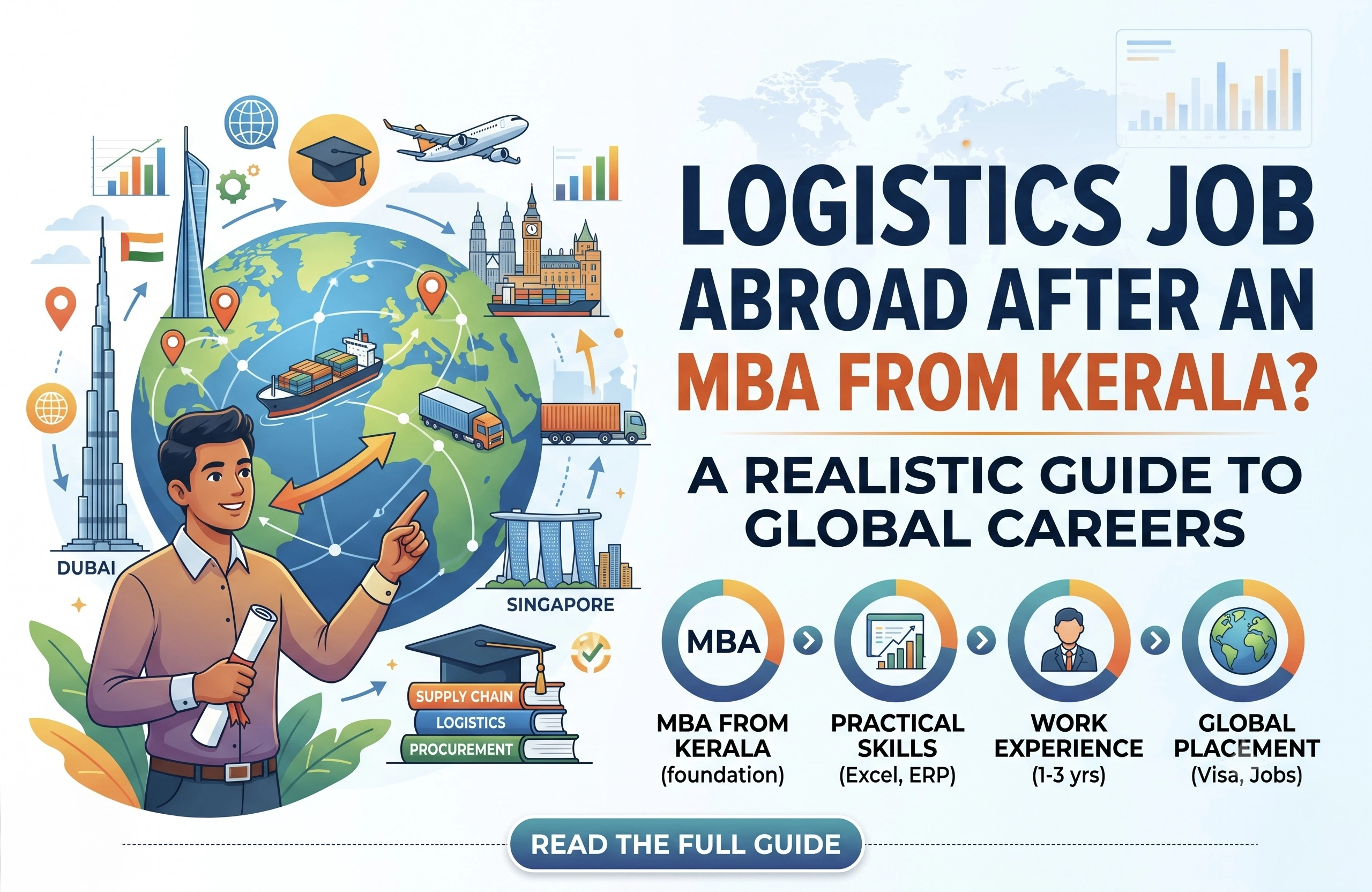
Can You Get a Logistics Job Abroad After an MBA from Kerala? A Realistic Guide
Admissions Started
Book your seat Now!
- AIRPORT MANAGEMENT
- LOGISTICS & SUPPLY CHAIN MANAGEMENT
- HOSPITAL ADMINISTRATION
- DIPLOMA & PG DIPLOMA
- 6 MONTHS & 1 YEAR
Can You Get a Logistics Job Abroad After an MBA from Kerala? A Realistic Guide
Short answer: an MBA in Logistics and Supply Chain Management can genuinely support an international logistics career, but the degree by itself doesn't produce a job offer, a visa, or a sponsorship. Those are three separate things, decided by three separate parties, and mixing them up is where most students go wrong when planning a Gulf or overseas move straight out of an MBA programme.
This guide walks through what actually gets someone hired abroad, how visas really work, and what a Kerala student should be doing right now if this is the goal.
Can an MBA from Kerala Help You Get a Logistics Job Abroad?
Yes, it can. An MBA in Logistics and Supply Chain Management builds the kind of knowledge international employers do care about: procurement, inventory planning, transportation coordination, and supply chain strategy. None of that knowledge becomes less valid because you studied it in Kochi instead of London.
What the MBA doesn't do is skip the steps every employer runs for every candidate, local or foreign: checking relevant experience, testing practical skills, and confirming the person can legally work in that country. The degree gets your application taken seriously. It doesn't replace the rest of the hiring process.
What Employers Actually Look For
Ask any logistics hiring manager in Dubai, Riyadh, or Singapore what they check first, and it's rarely "which university." It's usually:
Relevant experience in the specific function they're hiring for (procurement, warehousing, freight, planning)
Practical skills, especially advanced Excel, ERP systems (SAP is common across the Gulf), and data-driven decision-making
Communication ability, since coordinating across vendors, warehouses, and international partners is most of the job
Understanding of import/export and international trade documentation, particularly for roles touching customs or freight forwarding
Fit for the specific role, since "supply chain" covers wildly different day-to-day work depending on whether it's procurement, warehousing, or transportation
Your MBA covers the theory behind all of this. What moves you from "qualified on paper" to "hired" is being able to show you can actually do the job, through internships, projects, or prior work.
Can Freshers Get Logistics Jobs Abroad?
This is the part most course marketing glosses over, so here it is plainly: a fresh MBA graduate with zero work experience is competing against candidates who already have two or three years of hands-on logistics experience, often gained in the same region they're applying to. That's a real disadvantage, not an insurmountable one, but a real one.
A more realistic sequence looks like this:
MBA → entry-level logistics role (in India or wherever you can start) → 1 to 3 years of practical experience → stronger, specific skill set → international applications → interviews → visa process handled by the hiring employer
This isn't the only path. Some freshers do land international roles directly, particularly with multinational companies that hire graduate trainees across regions. But treating overseas employment as the first step after graduation, rather than a step you build toward, sets up unrealistic expectations.
Which Logistics Jobs Can You Apply For After an MBA?
Depending on your specialization, interests, and eventual experience level, roles worth targeting include:
Role Category | What It Involves |
Supply Chain Executive/Analyst | Planning, forecasting, and optimizing the end-to-end supply chain |
Procurement/Purchasing Executive | Sourcing suppliers, negotiating contracts, managing vendor relationships |
Warehouse Operations Executive | Managing inventory, storage, and warehouse workflows |
Logistics/Transport Coordinator | Scheduling and tracking shipments and transportation |
Freight/Shipping Coordinator | Managing international shipping documentation and customs coordination |
Operations Executive | Broader operational oversight across logistics functions |
Actual eligibility for any of these always comes down to the specific employer's job description, your experience level, and that country's work authorization requirements, not the job title alone.
What Skills and Certifications Actually Move the Needle
Skip the idea that any single certification unlocks overseas hiring. What genuinely helps:
Advanced Excel and data analysis, arguably the single most requested practical skill in logistics job postings globally
ERP/software familiarity (SAP, Oracle, or similar systems commonly used across Gulf and international logistics companies)
Import/export and customs documentation knowledge, especially for freight-facing roles
Vendor management and negotiation skills
Business-level English communication, since most Gulf logistics workplaces operate in English day-to-day
Certifications in supply chain management (from recognised bodies) can add credibility, particularly if you're applying for a specific technical role, but they supplement experience and skills rather than substitute for them. If a job listing specifically asks for a certification, that's the signal to get it, not a certification chosen at random, hoping it helps everywhere.
What About Visa Sponsorship and Work Permits?
This is where a lot of confusion happens, so here's the sequence as it actually works, using the UAE as the example most Kerala students ask about:
You apply and interview → you receive a formal job offer → your employer initiates the work permit process → your employer applies through the relevant government authority (MOHRE for mainland companies, or the specific free zone authority) → you complete a medical test and biometrics → your residence visa and Emirates ID are issued → you're legally authorized to work
A few facts worth knowing clearly:
Your employer sponsors and pays for your UAE work visa by law. You are not expected to pay for your own visa processing.
If anyone asks you to pay money for a "visa job" or "sponsorship," whether an agent, a company, or an individual, that is a red flag. Legitimate employers cover these costs themselves.
The process differs slightly for mainland versus free zone employers, and it differs again for each Gulf country, so always confirm the specifics with the actual employer or that country's official immigration authority, not a third-party forum.
A job offer is the trigger for this entire process. Without one, there's no visa application to make, regardless of qualification.
Gulf Logistics Jobs vs Other International Markets
"Abroad" isn't one job market, and treating the Gulf, Europe, and Southeast Asia as interchangeable leads to bad planning.
Gulf countries (UAE, Saudi Arabia, Qatar, Oman, Bahrain, Kuwait): Generally the most accessible starting point for Indian logistics graduates, given the large expatriate workforce, employer-paid sponsorship norms, and strong demand in freight, warehousing, and trade-linked logistics roles. Requirements still vary meaningfully by country and by individual employer.
Other international markets (Europe, Singapore, Australia, etc.): Typically involve stricter points-based immigration systems, higher experience thresholds, and sometimes separate skilled-migration visa categories rather than a straightforward employer-sponsorship model. These markets are not impossible, but they usually require several years of prior experience before international employers seriously consider a candidate.
Whichever market you're targeting, check that specific country's official immigration authority for current rules rather than relying on generalized "Gulf visa" information, since regulations do change.
Is Studying Logistics in Kerala a Disadvantage?
No, not on its own. Where you studied is one line on your resume. What an employer actually weighs more heavily is what you learned, what you can demonstrate through experience or projects, how well you communicate, and whether you meet that country's legal work requirements. A Kerala-based MBA graduate with strong Excel skills, a completed internship, and clear communication is a stronger candidate than a graduate from anywhere else with none of those things.
The location of your degree matters far less than what you did with the two years you spent earning it.
A Realistic Path from Kerala to an International Logistics Career
MBA in Logistics & Supply Chain Management → build practical skills (Excel, ERP, documentation) during the course → complete internships or live projects → apply for entry-level logistics roles (India or abroad) → gain 1 to 3 years of relevant experience → target specific international roles matching that experience → employer-led visa/work-permit process → relocation and career progression
This is a general framework, not a fixed timeline. Some people move faster, some slower, and the path always depends on the specific roles and employers involved.
What Should You Do Before Applying for Jobs Abroad?
While studying:
Build strong Excel and data-analysis skills, not just theoretical knowledge
Learn at least the basics of one common ERP system
Take internships seriously; they're often the only "experience" a fresh graduate has to show
Work on business communication, spoken and written
After graduating:
Build a CV focused on specific, demonstrable skills, not generic MBA language
Set up a clear, complete LinkedIn profile, since recruiters actively search it for logistics roles
Apply to specific roles matching your actual skill level, not every "logistics" listing you find
Research the destination country's genuine visa and sponsorship process directly from official sources
Prepare for interviews around practical scenarios, not just textbook supply chain theory
MBA in Logistics and Supply Chain Management at Kairos Institute
Kairos Institute's MBA in Logistics & Supply Chain Management is a 2-year programme open to graduates from any discipline with a minimum 50% aggregate, available in both online and offline formats. The programme is structured around current industry practices, with training covering the core functions discussed throughout this article, procurement, inventory management, transportation, and distribution, aimed at building practical, job-relevant skills rather than theory alone.
As with any course, if international placement, visa assistance, or specific employer tie-ups matter to your decision, confirm exactly what's currently offered directly with the institute rather than assuming from general course descriptions. You can find current course details on the MBA in Logistics and Supply Chain Management page.
Students weighing this against other logistics education options in Kerala can also look at the broader logistics programmes available across the state.
Where Can You Find Kairos Institute?
Kochi Door No. 3060, Divine Park Layout Road, Kakkanad, Ernakulam, Kerala – 682037 Get directions
Thodupuzha Kalarickal Bazar, Near Private Bus Stand, Thodupuzha, Idukki, Kerala – 685584 Get directions
Bengaluru #A7, KHB Colony, 5th Block, Koramangala, Bengaluru, Karnataka – 560095 Get directions
Final Takeaway
An MBA in Logistics and Supply Chain Management from Kerala is a genuinely useful foundation for an international logistics career, but it's a foundation, not a finished bridge. What actually gets someone hired abroad is relevant experience, demonstrable practical skills, and meeting that country's legal work requirements, none of which the degree alone provides. Build those alongside the MBA, not after it, and the "abroad" question becomes a lot more realistic to answer.
If you're considering this course and want current details on eligibility, structure, and admissions, reach out to Kairos Institute directly for the latest information.
Frequently Asked Questions
Can I get a logistics job abroad after an MBA from Kerala?
Yes, it's possible, but the MBA alone doesn't guarantee it. Employers also weigh relevant experience, practical skills, and whether you meet that country's work authorization requirements.
Can freshers get logistics jobs abroad?
It's harder for freshers, since they're competing against candidates with existing experience. Some multinational graduate programmes do hire freshers internationally, but building 1 to 3 years of experience first is the more common and realistic path.
Is an MBA in Logistics useful for Gulf jobs?
Yes. Gulf logistics employers value the supply chain, procurement, and operations knowledge an MBA provides, though they'll still assess practical skills and experience separately.
Do I need work experience to get a logistics job abroad?
Not always required, but strongly preferred by most employers, especially for mid-level or specialized roles.
Does an MBA guarantee an overseas logistics job?
No degree guarantees employment. Hiring decisions depend on the specific employer, role, and your individual fit for that position.
Do I need a certification to work in logistics abroad?
Not universally. Certifications can help with specific technical roles, but they support your experience and skills rather than replace them.
Can I apply for logistics jobs in Dubai after studying in Kerala?
Yes. Where you studied doesn't restrict where you can apply. What matters is your qualifications, skills, and whether you meet the employer's and the country's requirements.
Do I have to pay for my own work visa in the UAE?
No. Under UAE labour law, the employer sponsors and pays for the work visa. If anyone asks you to pay for a "sponsorship" or "visa job," treat that as a scam.
What skills are most important for international logistics jobs?
Advanced Excel, ERP system familiarity, import/export documentation knowledge, vendor management, and strong business communication.
Does studying in Kerala affect my chances of getting an overseas job?
Not meaningfully on its own. Employers weigh your skills, experience, and communication far more than the location of your degree.
Considering an MBA in Logistics and Supply Chain Management? Contact Kairos Institute for current course details, eligibility, and admission information.
Popular Blogs
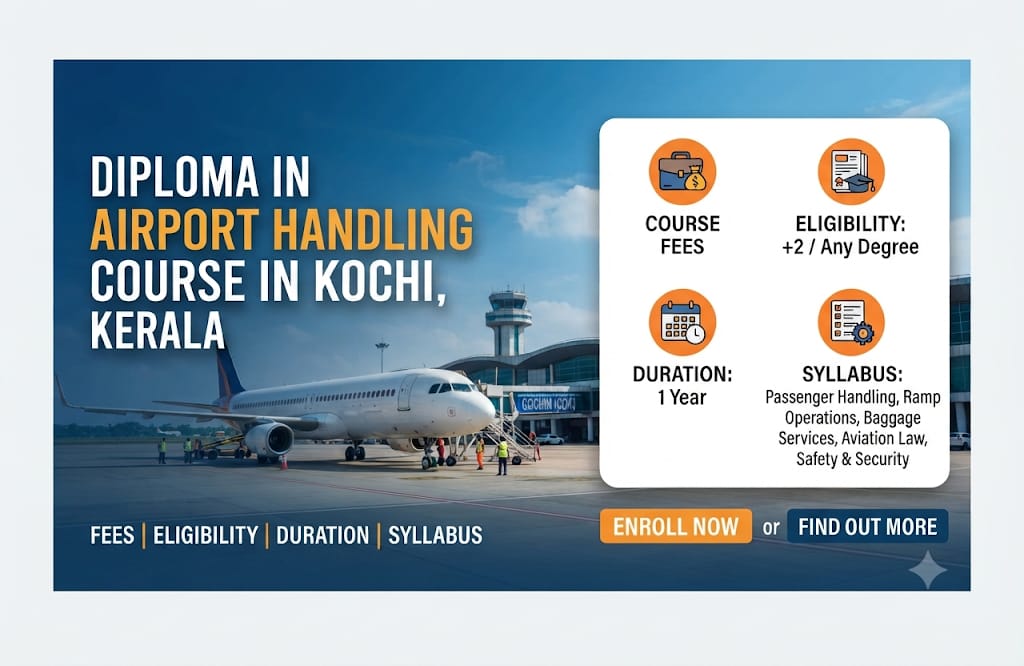
Diploma in Airport Handling Course in Kochi, Kerala: Fees, Eligibility, Duration & Syllabus
Read More
Diploma in Warehouse Management Course in Kochi, Kerala: Fees, Eligibility, Duration & Syllabus
Read More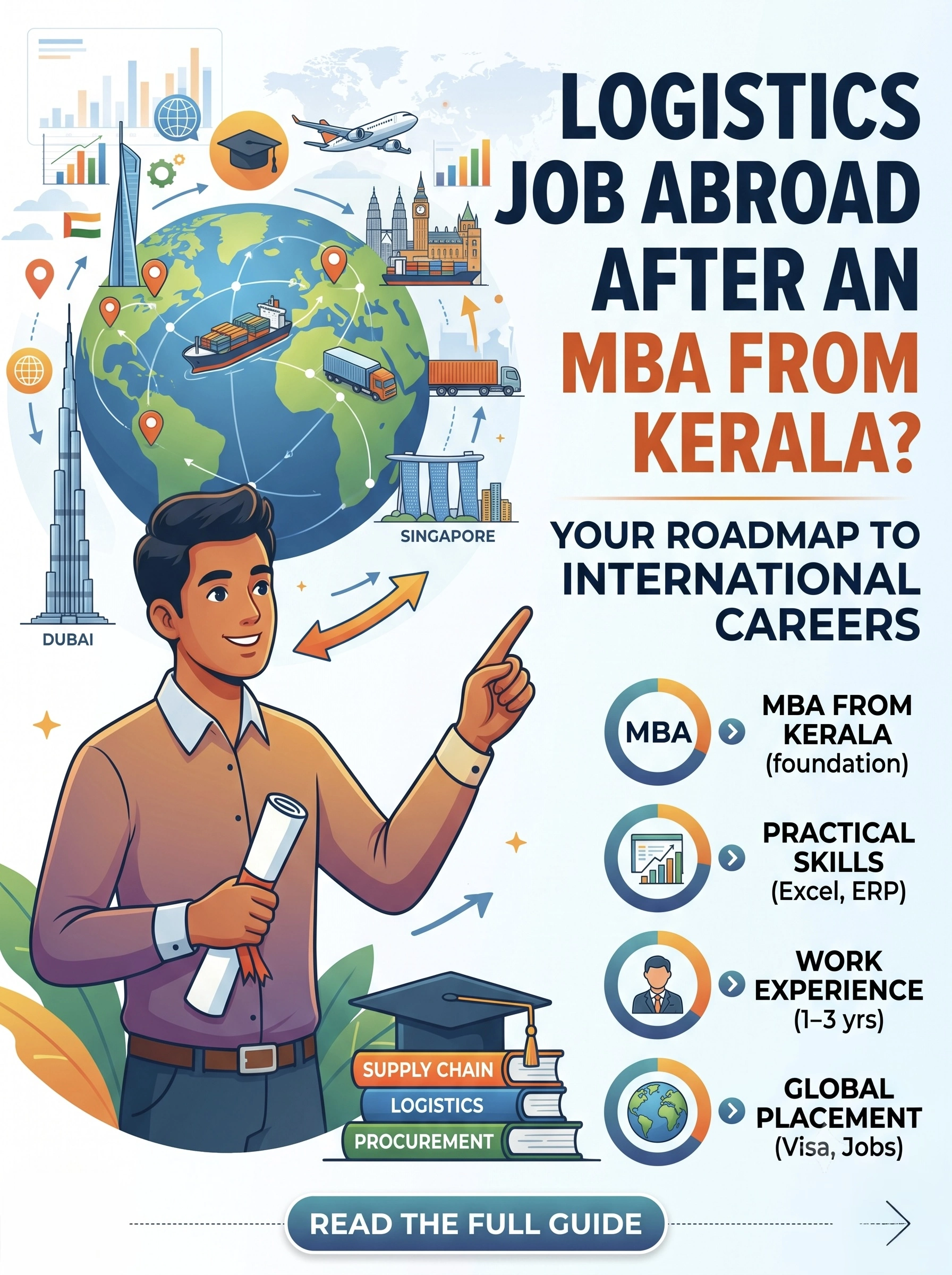
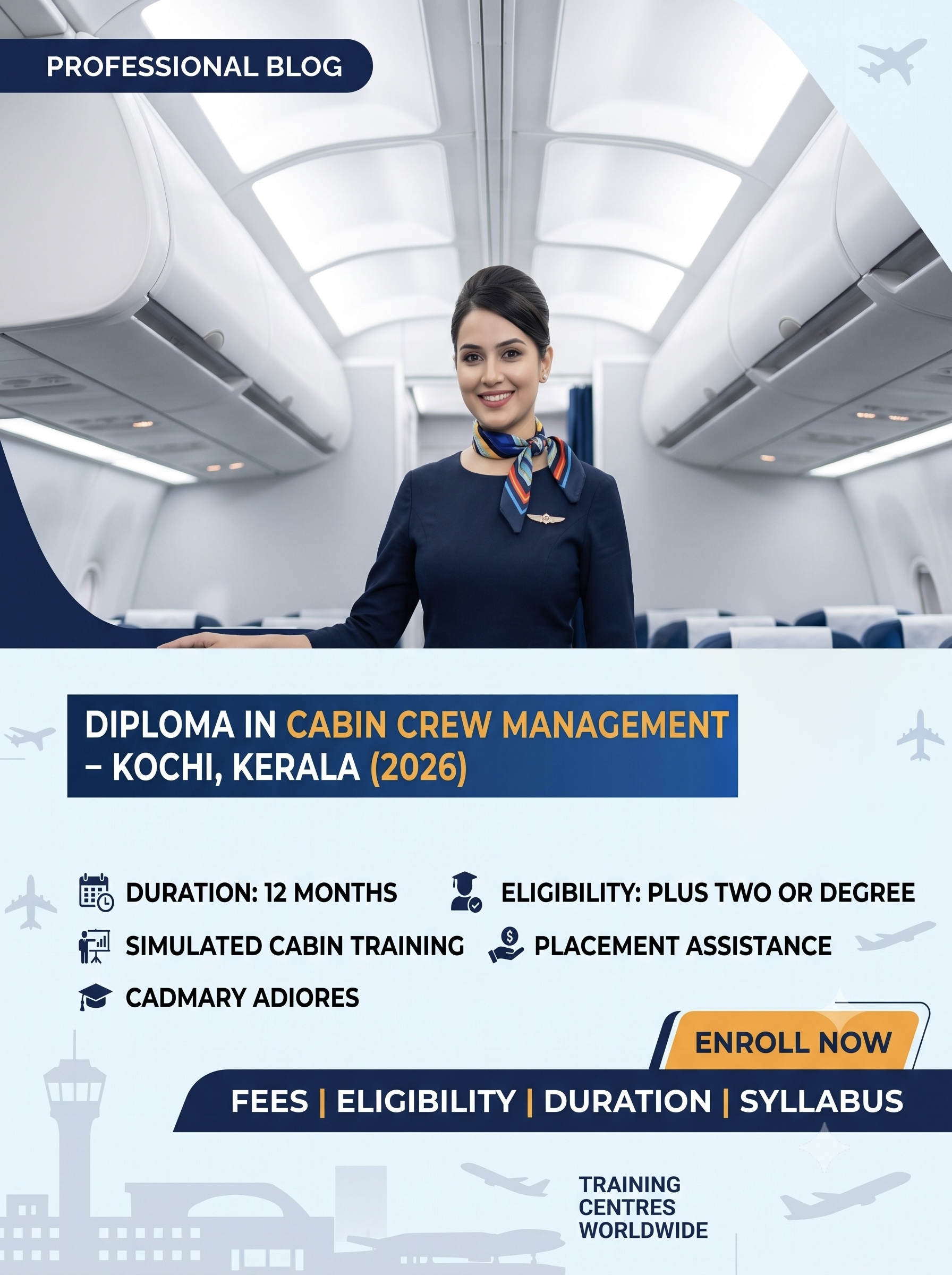
Diploma in Cabin Crew Management Course in Kochi, Kerala: Fees, Eligibility, Duration & Syllabus (2026)
Read More


What Certifications Should Your Aviation Institute Have? A Complete Guide for Students and Parents in Kerala
Read More



How AI and Automation Are Changing Airport Jobs in 2026 — and What It Means for Your Career
Read More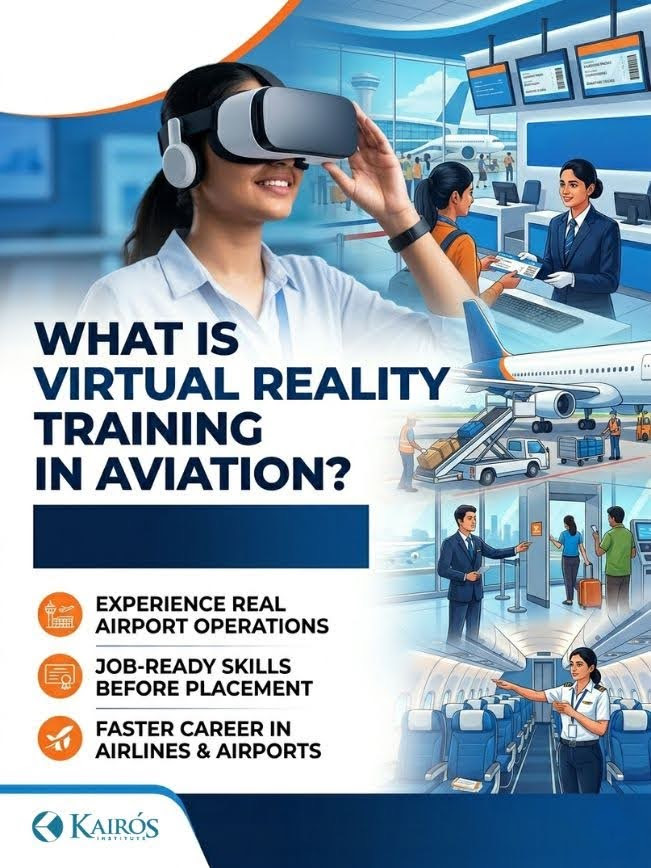
What Is Virtual Reality Training in Aviation? How Kairos Institute Uses VR for Student Learning
Read More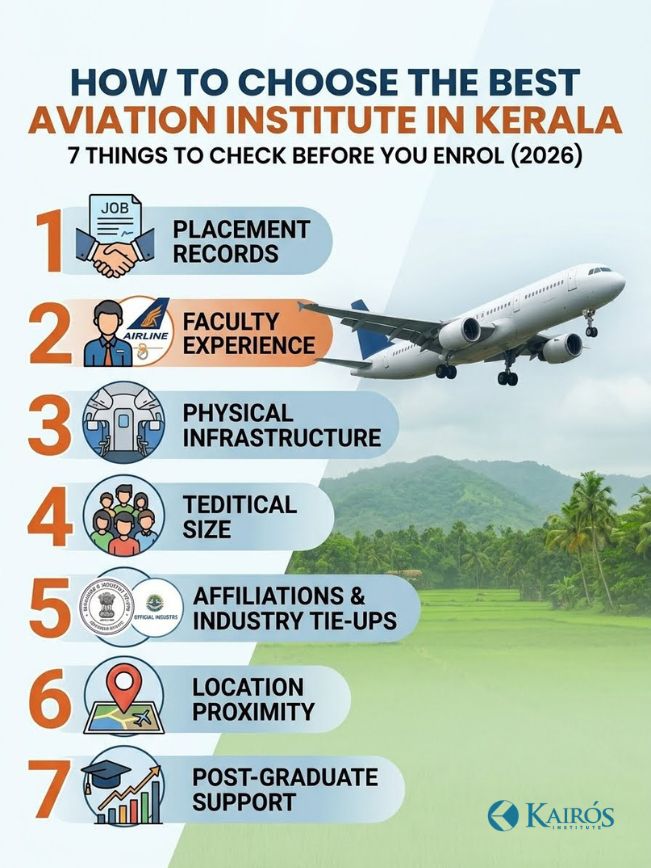
How to Choose the Best Aviation Institute in Kerala — 7 Things to Check Before You Enrol (2026)
Read More