
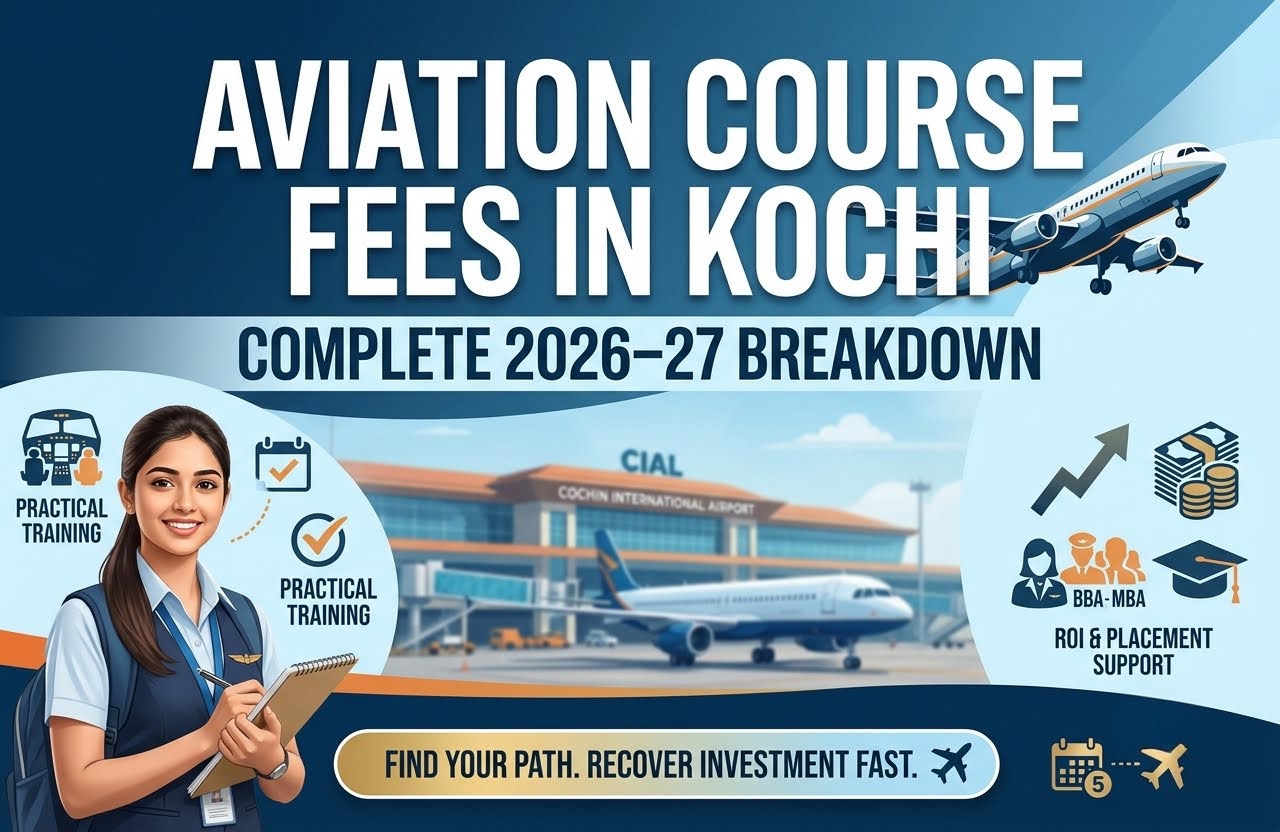
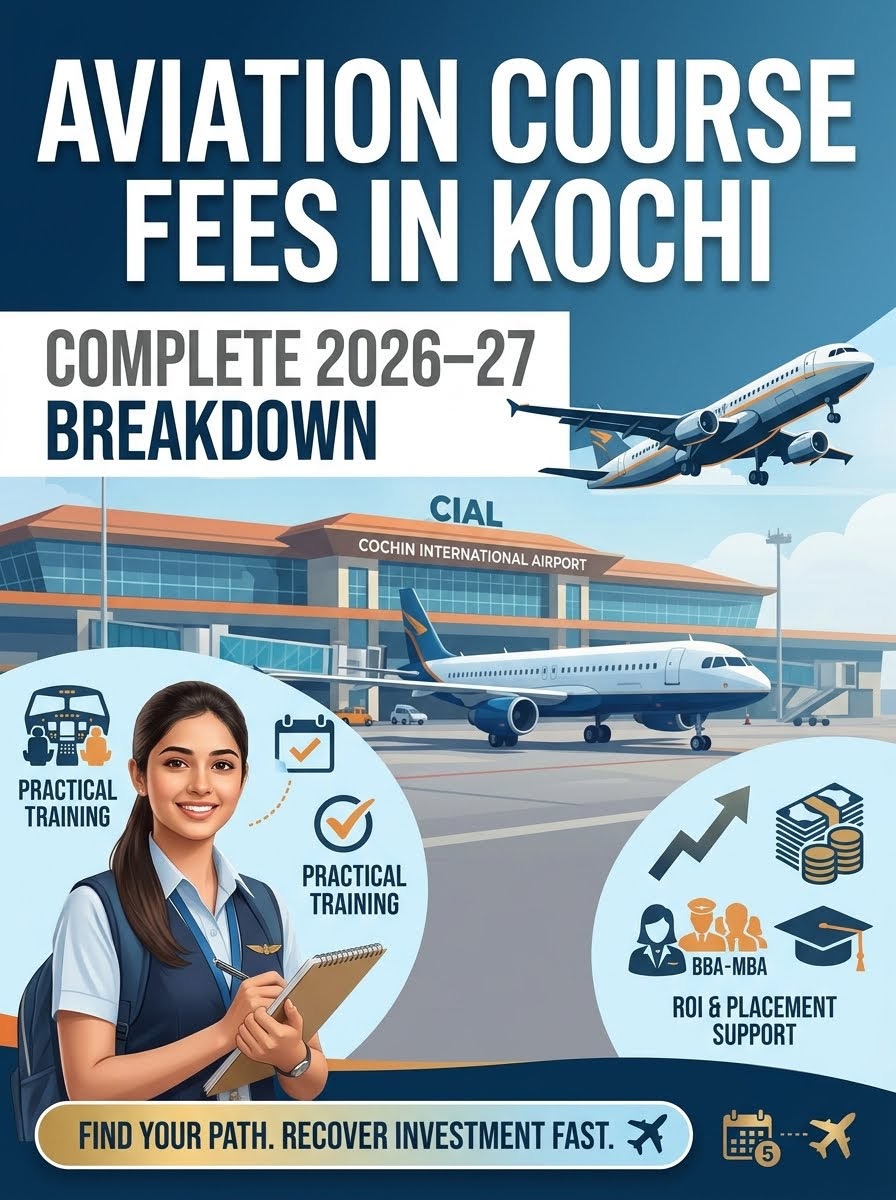
Aviation Course Fees in Kochi: Complete 2026–27 Breakdown
Admissions Started
Book your seat Now!
- AIRPORT MANAGEMENT
- LOGISTICS & SUPPLY CHAIN MANAGEMENT
- HOSPITAL ADMINISTRATION
- DIPLOMA & PG DIPLOMA
- 6 MONTHS & 1 YEAR
The moment a student decides they want a career in aviation, the next question from a parent is almost always: "How much will this cost?"
And the student is probably thinking: "Is this course actually within reach, or is aviation only for people with a lot of money?"
Both are valid questions, and both deserve honest answers.
This blog gives you a complete, no-nonsense fee breakdown for aviation courses in Kochi in 2026–27. Not just the tuition number, but everything that's typically included, what's usually extra, why some institutes charge more than others, and most importantly, how to figure out whether you're getting real value for what you're paying.
Why Kochi Is One of the Best Places to Study Aviation in India
Before we get into fees, a quick word on why location matters here.
Kochi sits adjacent to Cochin International Airport (CIAL), one of the busiest international airports in South India, handling millions of passengers and connecting Kerala to the Gulf, Europe, and Southeast Asia. This proximity is not just geography. For aviation students in Kochi, it means airport visits, live operational exposure, and internship access that students in landlocked cities simply cannot replicate.
Kochi also has a large population of students from Ernakulam, Idukki, Thrissur, Palakkad, and the Gulf-connected families of Kerala — many of whom are looking at aviation as a direct route to international career opportunities. Kairos Institute runs aviation programmes across Kochi, Thodupuzha, and Bangalore, and the full picture of what's available across campuses is on the aviation institute in Kerala overview page. Understanding what these courses cost in Kochi specifically and what drives those costs is the starting point for a sound decision.
The Real Question Behind Every Fee Search
Let's name what's actually happening when a student or parent searches for "aviation course fees in Kochi."
Students are asking: Can I afford this? And is the fee worth it compared to what I'll earn?
Parents are asking: Is this a legitimate investment in my child's career, or are we paying for a certificate that goes nowhere?
Both questions come down to the same thing: value. Not just cost.
A ₹40,000 course that places you nowhere is far more expensive than a ₹2 lakh course that places you in a role earning ₹25,000 per month within 60 days of graduation. That's the ROI lens through which this blog is written.
Aviation Courses Available in Kochi: What's on Offer in 2026–27
Kochi has over 17 institutions offering aviation-related programmes. These broadly fall into four categories based on duration and career outcome.
1. Short-Term Diplomas in Aviation (6 months)
The fastest entry point into aviation. Six-month programmes are skill-specific and job-focused, ideal for students who want to start working quickly or want to specialise in one area of airport operations.
Market fee range in Kochi (2026–27): ₹30,000 to ₹1,00,000 (total)
In this range, you'll find specialisation-focused diplomas in areas like airfare and ticketing, airport handling, passenger management, cargo management, and travel and tourism. Kairos Institute offers several 6-month programmes in this category covering everything from Amadeus GDS and DCS software training to cargo documentation and tour operations. The full list of available courses is on the aviation institute in Kerala overview page, linked above.
What to know: Short programmes vary widely in quality across Kochi institutes. Some include genuine airport exposure and GDS/DCS software training; others are mostly classroom-based. The fee alone doesn't tell you which is which; always ask specifically what practical sessions are included before enrolling.
2. One-Year Diploma Programmes (12 months)
The most popular format for fresh 12th pass students in Kochi. A 1-year diploma gives you enough breadth to qualify for multiple role types in the aviation and hospitality sectors, and gets you working within a year of completing 12th.
Market fee range in Kochi (2026–27): ₹60,000 to ₹2 lakh (total)
At Kairos Institute, the 12-month range includes the Diploma in Airline and Airport Management — the most comprehensive option, covering ground operations, passenger services, air ticketing, airport management basics, and customer service. There is also a Diploma in Cabin Crew Management for students targeting in-flight roles, and a Diploma in International Hospitality and Travel Management for those looking at Gulf hospitality and international travel careers. Eligibility for all three: Degree or Plus Two equivalent.
The 1-year diploma range is the sweet spot for most students, fast enough to be working within a year of finishing 12th, affordable compared to a 3-year degree, and directly tied to employment outcomes.
3. BBA in Aviation (3 years)
A full undergraduate degree that combines business management with aviation-specific knowledge. This is the right choice for students who want a recognised degree, higher long-term earning potential, and the option to move into management roles or pursue an MBA in Aviation later.
Market fee range in Kochi (2026–27): ₹2.5 lakh to ₹5 lakh (total, for 3 years at private institutes)
At Kairos Institute, the BBA with Aviation is a 3-year undergraduate programme covering airline management, airport operations, aviation business, customer service, cargo and logistics fundamentals, and management principles. Eligibility: Plus Two (any stream), minimum 50% marks.
For students comparing options: government-affiliated colleges in Kerala offer aviation undergraduate programmes at significantly lower fees, sometimes ₹60,000 to ₹1.5 lakh for the full 3-year programme, but seats are limited and competitive.
4. MBA in Airline and Airport Management (2 years)
For graduates who want to move into senior management, operations leadership, or airline strategy roles, the postgraduate route is the way up.
Market fee range in Kochi (2026–27): ₹3 lakh to ₹7 lakh (total, for 2 years at private institutes)
Kairos Institute offers an MBA with Airline and Airport Management, a 2-year postgraduate programme that builds advanced skills in airline operations, airport management, aviation finance, strategy, and leadership. Eligibility: Completed graduation with a minimum 50% aggregate.
This is suited for working professionals looking to move up, graduates who want leadership-track careers in aviation, or students who have completed a BBA and want a postgraduate qualification to open international opportunities.
What Drives the Fee Difference? Why Two Institutes Can Charge Very Different Amounts
This is the most important thing to understand about aviation course fees in Kochi, and it's what most blogs don't explain.
Accreditation and recognition: Institutes with government-recognised certifications, university affiliations, or internationally recognised accreditations (such as DGCA recognition, NSDC registration, or ties with aviation bodies) invest more in maintaining those standards. Their fees reflect that but so does the value of their certificates in actual airline interviews.
Faculty quality: Courses taught by working aviation professionals, former cabin crew, airline operations managers, and ground handling supervisors cost more to run than programmes staffed by general faculty. The difference shows up in placement outcomes. Airlines don't just hire certificates; they hire people who understand how an airline actually works.
Infrastructure: Mock airport setups, DCS (Departure Control System) software training, uniform and grooming facilities, and simulation exercises, all of these cost money to build and maintain. Institutes that invest in infrastructure pass some of that cost to students. Institutes that offer only classroom theory don't. Guess which graduate is more employable.
Placement support: A dedicated placement cell with active airline relationships where HR teams from IndiGo, Air India Express, Air Arabia, or ground handling companies actually visit campus for recruitment drives is an investment. Institutes that offer genuine, structured placement support reflect that in their fees.
Internship access: Courses that include supervised internships at actual Kochi airports or airline offices cost more to arrange and deliver. But an intern who has spent two months working at Cochin International Airport has something on their CV that no amount of classroom training can replicate.
The fee number alone tells you nothing. What matters is what's built into that fee.
What's Usually Included vs What's Usually Extra
Most institutes in Kochi list a headline tuition fee. Here's what that typically does and doesn't cover:
Usually included:
Classroom instruction and study materials
Basic exam and registration fees (for in-house certification)
Access to training facilities during the course
Often charged separately — always ask:
Airline or university examination fees (₹3,000 to ₹10,000)
Uniform and grooming kit (₹2,000 to ₹8,000 depending on the programme)
Internship coordination fees at some institutes
Placement drive registration fees at some institutes
Not included in any course fee:
Accommodation and food if you're coming from outside Kochi
Daily commute to the institute and internship location
Personal grooming products required for training
For students from outside Ernakulam, add ₹8,000 to ₹15,000 per month for shared accommodation in areas near the institute. This is a real number to factor into your total budget.
Does a Higher Fee Mean a Better Aviation Course?
Not automatically, but there is a correlation worth understanding.
Institution reputation, course duration, included amenities, location, training facilities, and industry partnerships all influence course fees in aviation training. An institute in Kochi with a documented placement record with IndiGo, Air India Express, or Gulf carriers will charge more than one without it, and that premium is usually justified.
That said, the most expensive aviation course in Kochi is not automatically the best. What you should be evaluating is this combination: accreditation + practical training + placement record + faculty background. When you find all four at a reasonable fee, that's where the value is.
The lowest-priced option is rarely the smartest choice in aviation education. Investing in a course that combines professional skills, airline-focused education, and strong placement support makes a meaningful difference in long-term career outcomes.
Fee vs Salary: What Does the Return Look Like?
This is the question that matters most, and most fee blogs never answer it.
Ground staff freshers in Kochi earn ₹18,000 to ₹25,000 per month at domestic airlines and airports. For roles at premium airports and international carriers, starting salaries are higher. With 2 to 3 years of experience, professionals move into roles paying ₹35,000 to ₹60,000 per month.
For cabin crew roles with Gulf carriers Air Arabia, Emirates feeder operations, and Oman Air, the numbers jump significantly. Tax-free salaries in the Gulf for trained aviation professionals from Kerala range from ₹60,000 to ₹1,50,000 per month and above.
The practical implication: a student who completes a ₹1 lakh diploma programme and gets placed in a ground staff role at ₹20,000 per month recovers their entire course fee investment within 5 months of starting work. A student who takes a Gulf placement at ₹80,000 per month recovers it within 6 weeks.
That's the real fee conversation.
What Parents Ask Most — With Honest Answers
"Can my child join an aviation course in Kochi from a commerce or arts background?"
Yes. Aviation management and airport operations courses in Kochi do not require a science background. Any stream, Science, Commerce, or Arts, is acceptable for the diploma and BBA programmes. The eligibility is 12th pass with a minimum of 50% marks from a recognised board.
"Does my child need to be a specific height or weight for aviation courses?"
For cabin crew roles specifically, there are height requirements set by airlines (typically 155 cm and above for female candidates, 170 cm and above for male candidates), and some visual standards. Ground staff, airport operations, and aviation management roles generally do not have strict physical requirements. Check with the institute about which course you're targeting.
"What is the age limit?"
Most aviation training institutes in Kochi accept students between 17 and 26 years for cabin crew and ground staff programmes. For the BBA, standard undergraduate age norms apply. For detailed age eligibility, the age limit for the aviation courses guide covers this in full.
"Is the certificate recognised by airlines?"
This is the most important question to ask any institute. Government-recognised certificates through NSDC, university affiliation, or relevant aviation bodies carry more weight than purely private institute certificates. Always verify this before enrolling, not after.
"Are there EMI or instalment options?"
Many institutes in Kochi offer fee payment in 2 to 6 monthly instalments. Ask specifically at the time of inquiry. Some also offer merit-based fee concessions.
What Students Want to Know
"Diploma or BBA — which one should I choose?"
If you want to start working within a year and are clear about wanting ground staff, cabin crew, or airport operations roles, a 1-year diploma is your fastest and most direct route. If you want a degree that positions you for management roles and gives you the option of an MBA in Aviation later, the BBA is the right 3-year commitment.
For a side-by-side comparison of the course structures, the difference between aviation management and airport management, and the BBA Aviation vs BBA Airport Management guides cover this in detail.
"How do I know if an institute's placement record is real?"
Ask for the names of airlines where students from the last two batches were placed. Ask to speak with a recent graduate. If an institute has 100% placement and is proud of it, they'll answer both questions easily. If they hesitate, that's your answer.
"Is an IATA certificate necessary on top of this?"
This is one of the most common points of confusion for students in Kochi. The guide on whether you need an IATA certificate to start an aviation career answers this. Specifically, the short answer is no, it is not mandatory for most entry-level roles, and practical training with strong placement support typically matters more.
Quick Reference: Aviation Course Fee Ranges in Kochi (2026–27)
Course Category | Duration | Market Fee Range (Kochi) | Best Suited For |
Short-term aviation diplomas | 6 months | ₹30,000 – ₹1,00,000 | Fast entry, specific role specialisation |
Diploma in Airline & Airport Management | 12 months | ₹60,000 – ₹2 lakh | Broad aviation entry, multiple job options |
Diploma in Cabin Crew Management | 12 months | ₹60,000 – ₹2 lakh | In-flight cabin crew, air hostess roles |
BBA with Aviation | 3 years | ₹2.5 lakh – ₹5 lakh (total) | Degree with long-term management growth |
MBA in Airline & Airport Management | 2 years | ₹3 lakh – ₹7 lakh (total) | Graduates targeting leadership roles |
These are market ranges based on 2026–27 data across institutes in Kochi. Fees vary by institute, batch timing, and inclusions. Always verify directly with the institute for current and accurate figures.
Why Kochi Specifically Gives You an Edge
Studying aviation in Kochi is not just about the course. It's about the ecosystem around it.
Proximity to Cochin International Airport means airport visits are part of the curriculum in the way they simply can't be in cities without an international airport nearby. Industry connections, internship access, and placement drives with airlines operating Gulf routes are all easier to facilitate when you're training in a city that is itself a major aviation hub. Kairos Institute's Kochi campus in Kakkanad is one of the best aviation institutes in Kochi for students who want hands-on training alongside a structured, placement-focused programme — with VR-based aviation training, industry faculty, and direct airline connections built into the curriculum.
To Put It Simply
Aviation course fees in Kochi in 2026–27 range from ₹30,000 for the shortest certificate programmes to ₹5 lakh for a full BBA degree. The right number for you depends on your career goal, your timeline, and what the institute actually delivers for that fee.
What matters more than the headline fee is what's inside it: accredited certification, practical training with real airport exposure, faculty who have worked in the industry, and placement support with a verifiable track record.
A course that costs less but delivers none of those things is not a bargain. A course that costs more but places you in a role within 60 days is not expensive — it's an investment that pays for itself in the first few months of your career.
If you have questions about which aviation course in Kochi suits your background and goals, reach out to the Kairos Institute admissions team directly for a conversation — no pressure, just clarity.
Before that conversation, the aviation academy in Kochi compared the across-cities guide, which is worth reading — it breaks down how training quality and placement outcomes differ across institutes, so you can ask the right questions when you visit.
Popular Blogs
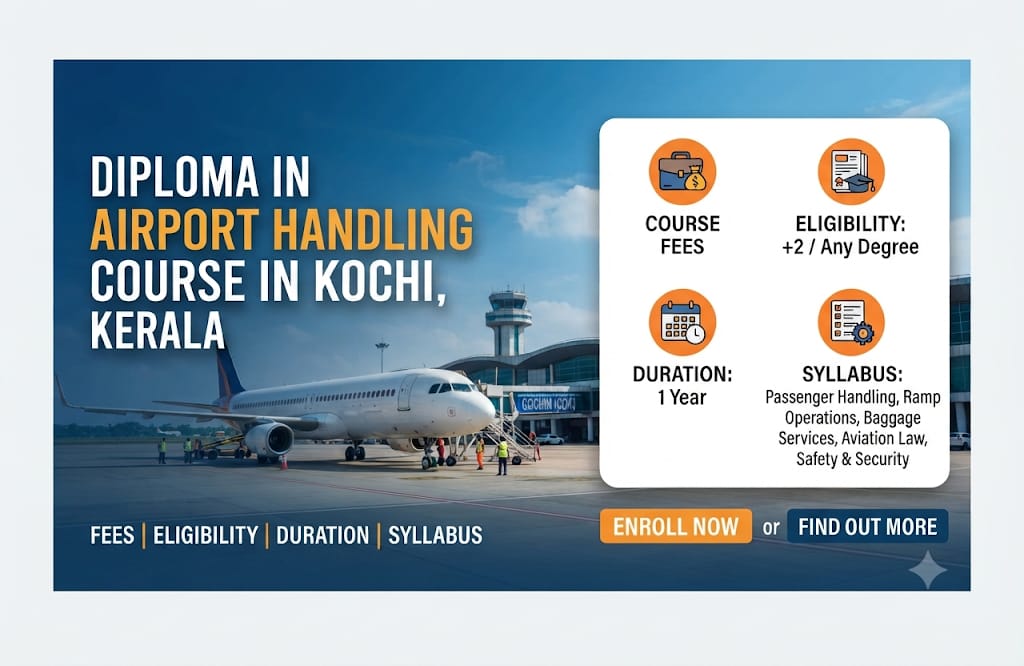
Diploma in Airport Handling Course in Kochi, Kerala: Fees, Eligibility, Duration & Syllabus
Read More
Diploma in Warehouse Management Course in Kochi, Kerala: Fees, Eligibility, Duration & Syllabus
Read More
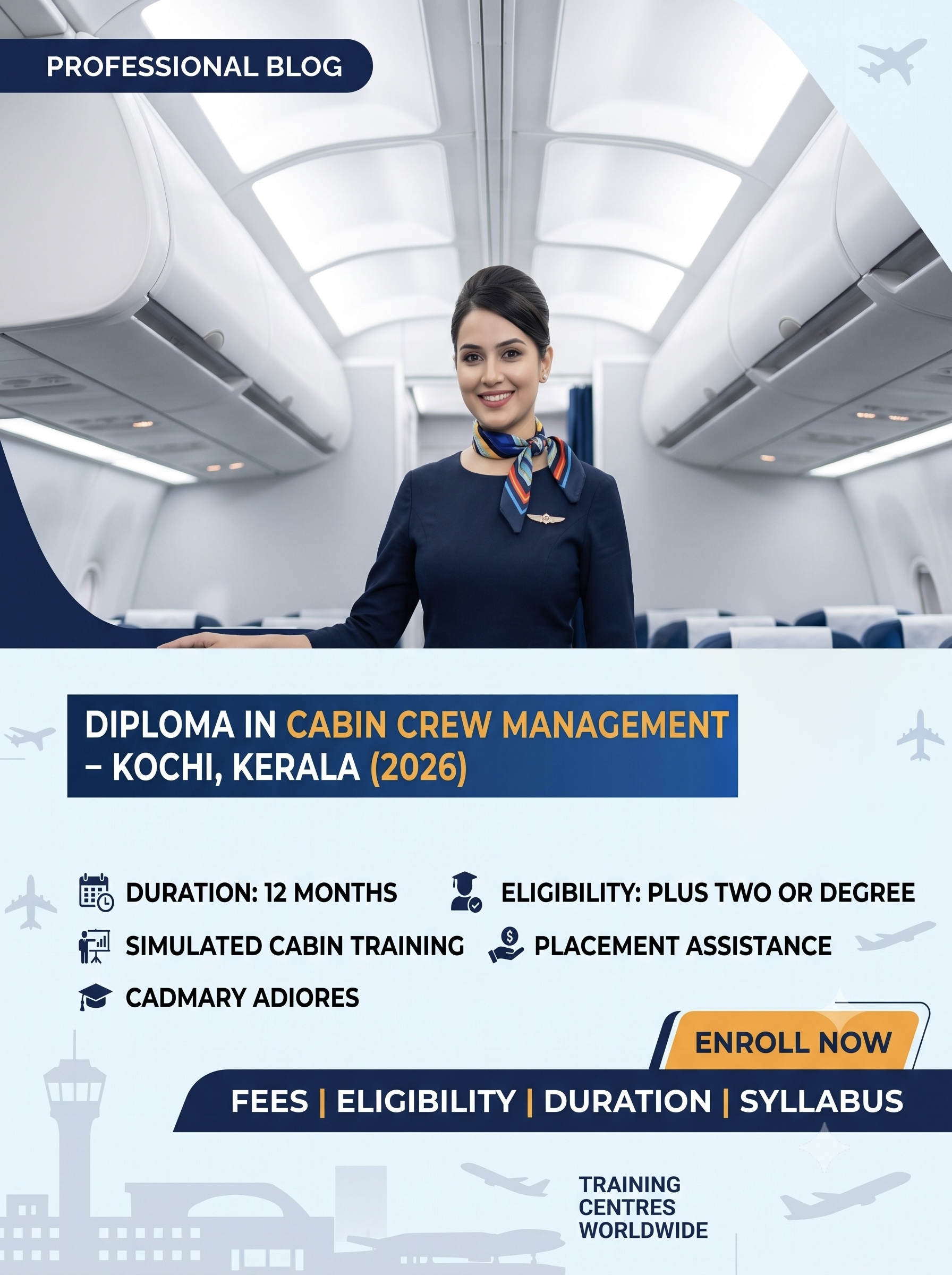
Diploma in Cabin Crew Management Course in Kochi, Kerala: Fees, Eligibility, Duration & Syllabus (2026)
Read More



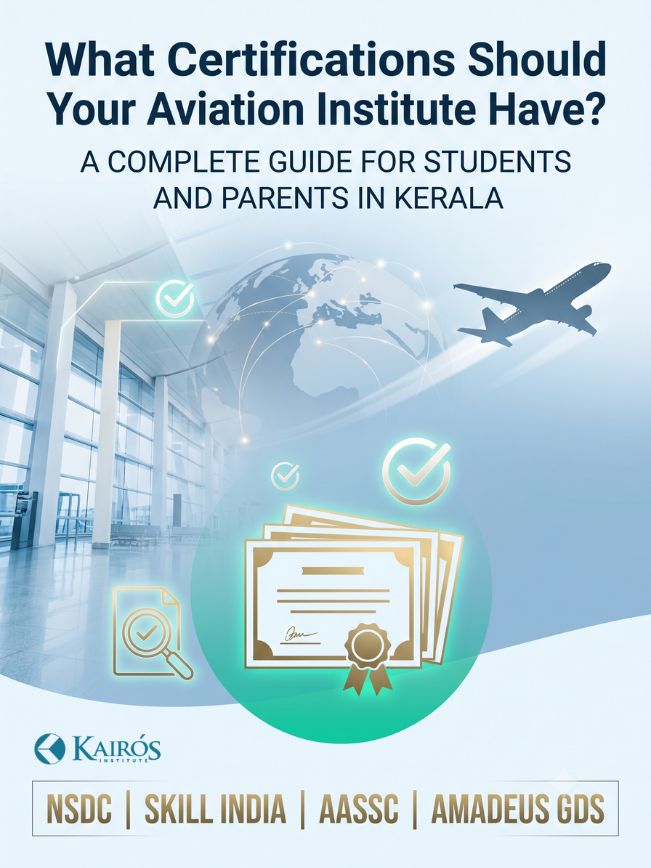
What Certifications Should Your Aviation Institute Have? A Complete Guide for Students and Parents in Kerala
Read More



How AI and Automation Are Changing Airport Jobs in 2026 — and What It Means for Your Career
Read More
What Is Virtual Reality Training in Aviation? How Kairos Institute Uses VR for Student Learning
Read More