For many students and parents exploring aviation courses, one question comes up repeatedly: Is an IATA certificate mandatory to start a career in aviation?
With high search volumes around IATA certification, it’s easy to assume that an IATA certificate is the only gateway into the aviation industry. But the reality is far more practical—and reassuring—for students after 12th, graduates, and even career changers.
This blog explains whether you can enter the aviation industry without an IATA certificate, what really matters to airlines, and why IATA certification alone is not enough for long-term success.
Why IATA Certification Alone Is Not Enough for a Career in Aviation
IATA (International Air Transport Association) certification mainly focuses on specific theoretical modules such as ticketing, fare calculation, or airline documentation. While this knowledge is useful, aviation careers demand much more than classroom theory.
Airlines and airports today look for:
Practical airport exposure
Communication and customer-handling skills
Operational knowledge of airport environments
Safety awareness and professionalism
Industry-oriented training, not just certification
An IATA certificate by itself does not provide real airport or airline exposure, which is why many students with only IATA certification struggle to crack interviews.
👉 This is also why aviation diplomas, airline training programs, and academy-based courses are becoming more relevant.
Students who want a clearer comparison between certification-based learning and industry-oriented training can explore our detailed guide on IATA Certificate vs Aviation Diploma: Which One Offers Better Industry Exposure?, which explains how real-world exposure impacts aviation career success.
Does Every Airline Job Require an IATA Certificate?
No. This is one of the biggest misconceptions among students and parents.
Many of these assumptions come from widespread confusion around IATA certification, especially among students and parents in Kochi, Kerala, and Bangalore. These common myths and misunderstandings are explained in detail in our blog on IATA Certification: What Students and Parents in Kochi, Kerala & Bangalore Commonly Misunderstand.
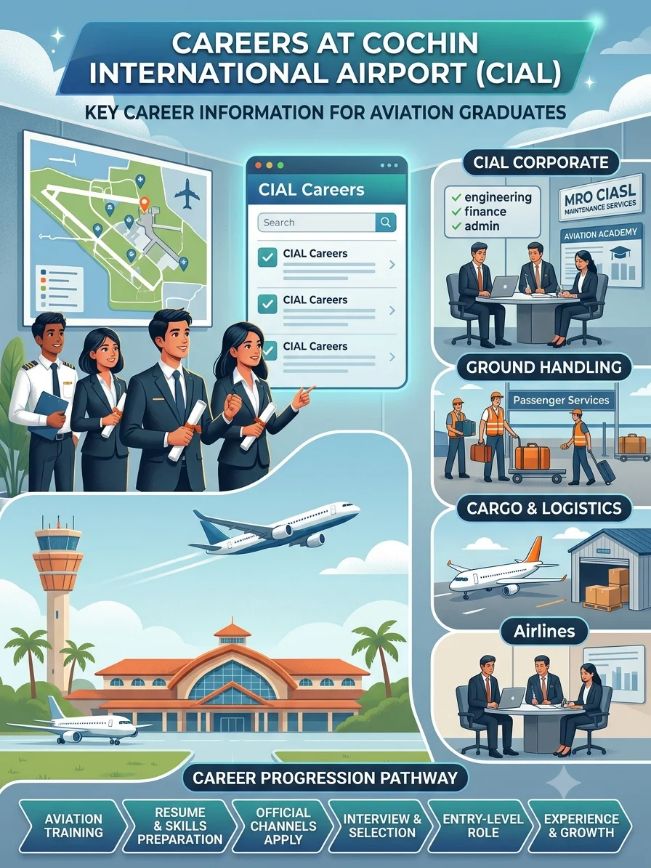
Most airline and airport roles do not require an IATA certificate, including:
For these roles, airlines prioritise:
Personality and communication skills
Safety and service training
Airport handling knowledge
Industry exposure and internships
IATA certification is only relevant for specific desk-based roles, mainly in:
Even in these cases, employers often prefer hands-on system training over just a certificate.
What Matters More Than an IATA Certificate in Aviation Careers?
Instead of focusing only on IATA certification, students should evaluate courses based on industry readiness.
Key factors that matter more include:
Practical aviation training
Airport and airline exposure
Soft skills and grooming training
Internship opportunities
Placement support and interview preparation
Aviation academies that offer diploma or professional aviation programs often cover multiple departments, helping students explore various roles before choosing a specialisation.
Can Aviation Diploma Courses Replace IATA Certification?
In many cases, yes—and often more effectively.
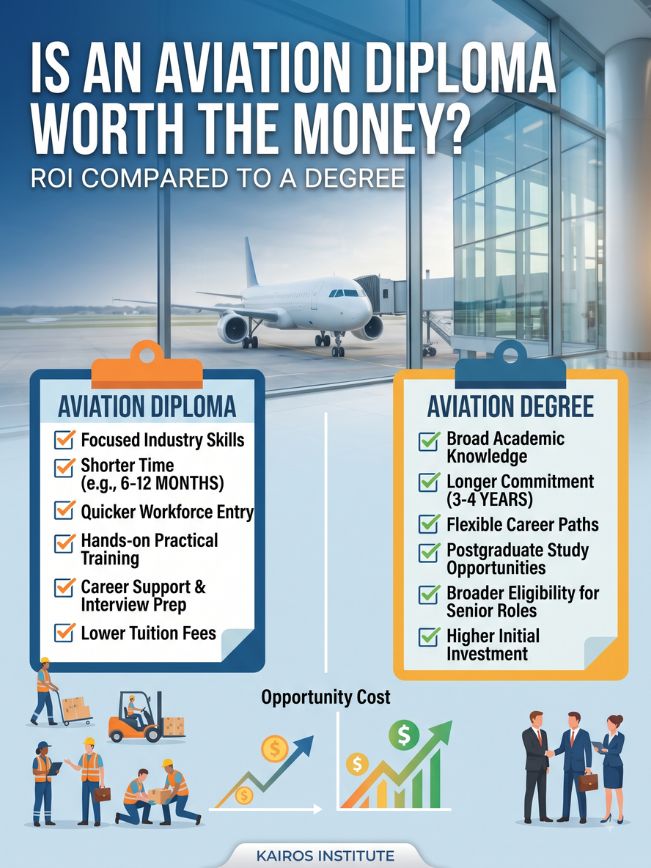
Aviation diploma courses are designed to:
Train students for multiple aviation roles
Provide real-world industry exposure
Prepare students for airline interviews
Build long-term career growth
Unlike IATA certification, which focuses on one narrow area, aviation diplomas prepare students for the actual working environment of airports and airlines.
👉 This is why many successful aviation professionals do not hold an IATA certificate, but instead come from structured aviation academies.
Who Should Actually Consider an IATA Certificate?
IATA certification may be suitable if:
You want a pure ticketing or reservations role
You plan to work in travel agencies
You already have aviation experience and want specialisation
For students after 12th or fresh graduates, starting with only an IATA certificate is often limiting.
Is IATA Mandatory to Enter Aviation?
No, you can absolutely join the aviation industry without an IATA certificate.
What matters most is industry exposure, practical skills, and professional training—not just a certificate.
Before choosing any aviation course, students and parents should understand:
What the course actually prepares you for
Whether it includes real-world aviation training
How it supports career entry and growth
Making an informed decision can save time, money, and frustration—and open doors to a much wider range of aviation careers.