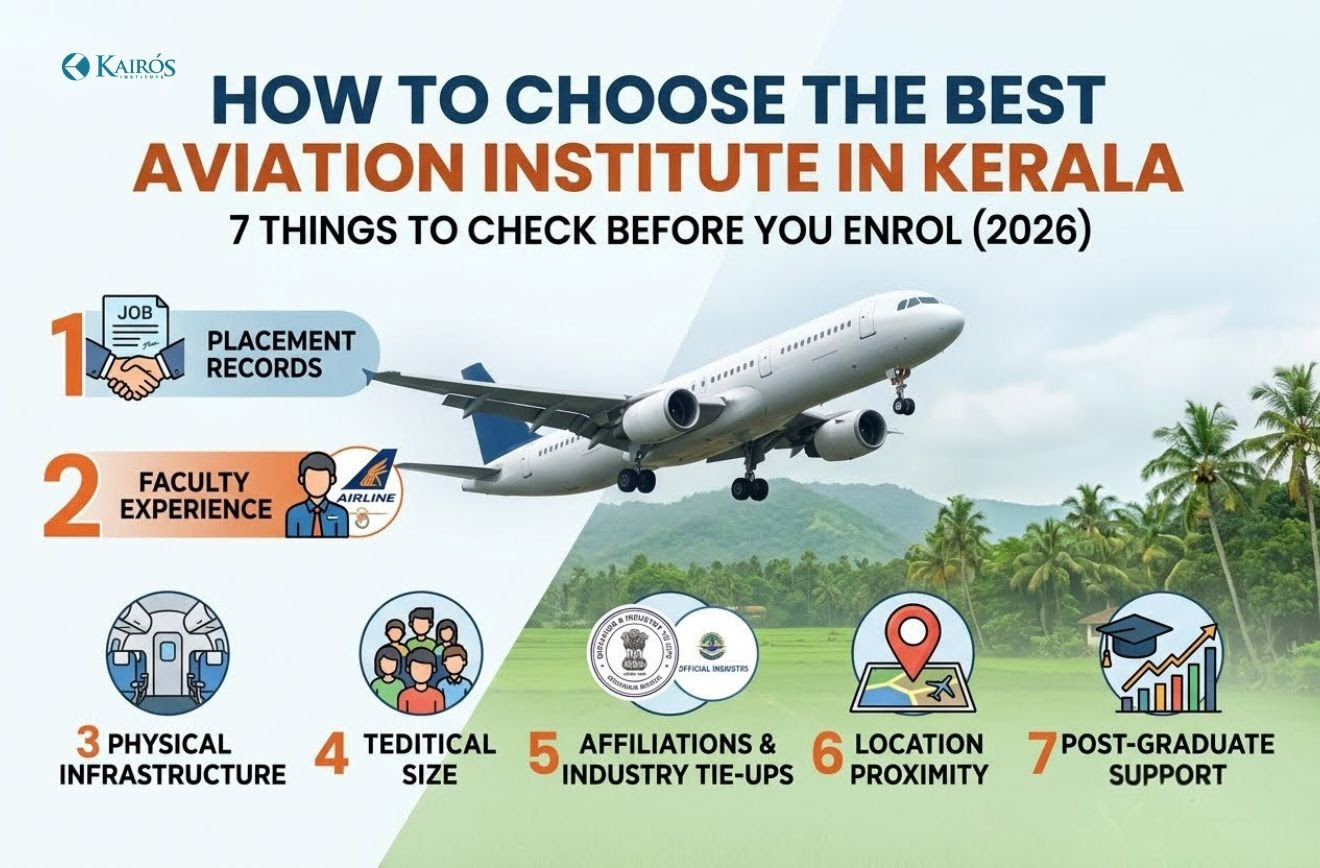
How to Choose the Best Aviation Institute in Kerala — 7 Things to Check Before You Enrol (2026)
Admissions Started
Book your seat Now!
- AIRPORT MANAGEMENT
- LOGISTICS & SUPPLY CHAIN MANAGEMENT
- HOSPITAL ADMINISTRATION
- DIPLOMA & PG DIPLOMA
- 6 MONTHS & 1 YEAR
Aviation is one of the fastest-growing career sectors in India — and Kerala, with its international airport connectivity, large NRI population, and growing air traffic, is at the centre of that growth. But when you search for the 'best aviation institute in Kerala,' you will find dozens of options, each claiming 100% placements, expert faculty, and industry-leading courses.
So how do you actually tell them apart?
This guide does not rank any institutions. Instead, it gives you a structured, practical checklist — 7 criteria that genuinely separate a good aviation institute from a great one. If you evaluate any institute (including Kairos) against these seven points, you will have everything you need to make a confident, informed decision.
Quick Definition An aviation institute is a professional training institution that prepares students for careers in airline operations, airport management, cabin crew, air cargo, ticketing, and related fields. In India, the quality of such institutes varies significantly — which is why evaluating them on specific, verifiable criteria matters. |
1. Does the Institute Have a Verifiable Placement Record?
This is the single most important question to ask — and it is the one most institutes answer vaguely.
Anyone can claim '100% placement assistance.' What you actually need to verify is:
• Which specific airlines or airport companies have hired their graduates?
• Can they show you, real alumni, whom you can contact?
• Are placements in roles relevant to the course, or just any job in any industry?
A credible aviation institute will name its recruitment partners openly. At Kairos Institute, for example, graduates have been placed with airlines including IndiGo, Air Arabia, Air India, and international carriers in the Gulf region — names that students and parents can research independently.
2. Who Are the Faculty — and Where Did They Work Before?
Aviation is a practical, operational field. A trainer who has never worked on an aircraft cabin, in an airport terminal, or within an airline operations room will teach you theory. A trainer who has spent years in the industry will teach you instinct.
When evaluating any aviation institute in Kerala or Bangalore, ask:
Do the trainers have direct airline or airport operations experience?
Are any of them former cabin crew, airport ground staff, or airline managers?
Is the faculty stable, or does the institute rely on rotating guest lecturers?
At Kairos Institute, faculty members include professionals with active industry backgrounds in airline operations, hospitality management, and aviation services — ensuring that what is taught in class reflects what actually happens in airports and aircraft.
3. What Does the Physical Infrastructure Look Like?
Aviation training is not a subject you learn only from textbooks. The physical training environment matters enormously — especially for courses like Cabin Crew Management, Airport Handling, and Passenger Service.
Look for:
Mock aircraft cabin for in-flight service training
Simulated check-in and boarding counter setups
Grooming and uniform training facilities
A library or resource centre with updated aviation manuals and regulations
An institute that asks you to imagine the aircraft cabin during training is not preparing you for the real thing. Physical simulation builds muscle memory — the kind of readiness that shows immediately during airline recruitment assessments.
4. How Large Are the Batches?
Batch size is a proxy for the quality of individual attention you will receive. Aviation careers require precision, communication skills, and personal presentation — all of which benefit from close mentoring.
Benchmark A batch size under 30 students is generally considered effective for skill-based aviation training. Batches of 50 or more tend to reduce one-on-one faculty interaction significantly. |
Smaller batches also mean your institute takes a more selective approach to admissions, which signals that they care about individual outcomes, not just enrolment numbers.
5. Does the Institute Have Recognised Affiliations and Industry Tie-ups?
In aviation education, affiliations play an important role. They indicate that an institute follows structured training standards and maintains connections with the industry, going beyond just promotional claims.
What to look for:
Collaborations with airlines or aviation service providers
Memoranda of Understanding (MOUs) for training, internships, or placements
University affiliations for degree programmes like BBA or MBA in Aviation
Tie-ups with airport operations, ground handling, or hospitality sectors
While global bodies like the International Air Transport Association (IATA) set widely recognised training benchmarks, it’s important to note that not all quality aviation institutes are directly affiliated with them.
Instead, many institutes focus on practical exposure, industry-relevant curriculum, and placement-oriented partnerships. Strong connections with aviation companies, real-time training environments, and internship opportunities can often be just as valuable in building a successful career — especially for roles in airport operations, cabin crew, and ground services.
For students aiming to work with international airlines, what matters most is skill development, communication training, and industry exposure, rather than affiliation alone.
6. Where Is the Institute Located — and Does It Matter?
Location is more than a convenience factor in aviation training. Proximity to a major international airport directly affects the quality of exposure, internship access, and job opportunities you receive during and after your course.
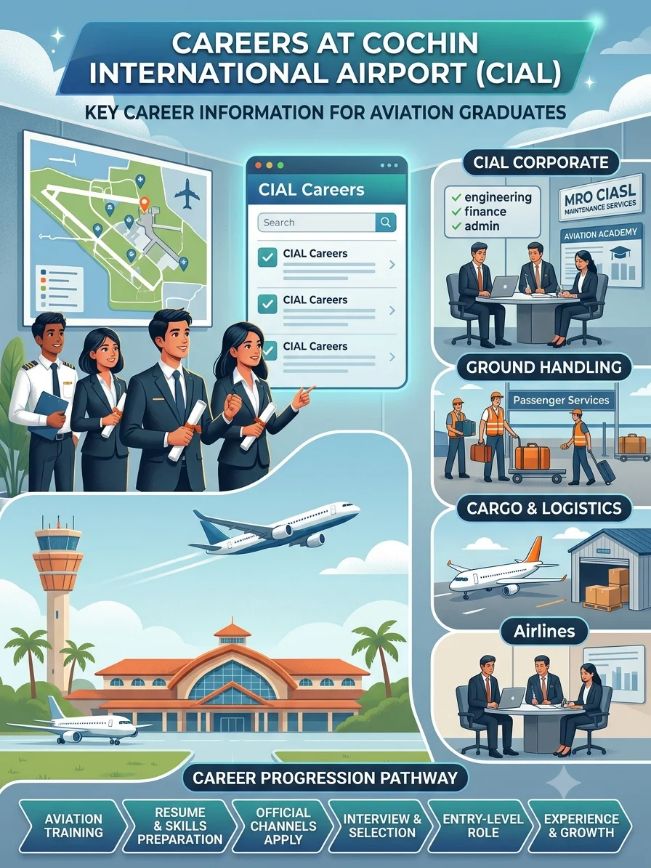
In Kerala, Cochin International Airport (CIAL) — located in Nedumbassery, Ernakulam — is the busiest airport in the state and one of the largest in South India by passenger volume. An aviation institute in Kochi or Ernakulam places students within practical reach of this ecosystem.
In Karnataka, Kempegowda International Airport Bengaluru (BIAL) serves as a major hub, with significant airline and ground operations activity. Kairos Institute's Bangalore campus positions students to access this market.
For NRI and Gulf-Return Students If you or your family has returned from the UAE, Qatar, Saudi Arabia, or Kuwait, studying at an aviation institute in Kochi gives you a geographic and cultural advantage. Kerala's aviation workforce has a strong presence in Gulf airline ground operations — and recruiters often visit Kochi campuses specifically. |
7. What Happens After You Graduate?
Placement support does not end when your course does. The aviation job market in India is competitive — especially for fresh graduates competing for airline roles in Tier-1 cities.
Evaluate whether the institute offers:
Resume building and personalised profile development
Mock interviews with airline-style assessments
An active alumni network you can reach out to
Ongoing job alerts and recruitment drives post-graduation
At Kairos Institute, post-course support is structured into the programme — not offered informally. Students go through mock airline interviews, grooming sessions, and receive active placement coordination from a dedicated team, not just a notice board of job listings.
The 7-Point Aviation Institute Evaluation Framework — At a Glance
Criterion | What to Look For | Why It Matters |
Placement record | Named airlines, verifiable % success, alumni contacts | Tells you if graduates actually get hired — not just trained |
Faculty background | Ex-airline crew, airport operations managers, DGCA-qualified trainers | Industry experience translates directly to job-ready skills |
Infrastructure | Mock aircraft cabin, airport simulation lab, uniform training | Hands-on practice separates good institutes from great ones |
Batch size | Smaller batches (under 30 students) for personalised attention | Aviation is detail-oriented; personal mentoring matters |
Affiliations | Airline MOUs, university affiliations, and verified industry tie-ups | Legitimate institutes have verifiable industry relationships |
Location | Proximity to a major international airport | Exposure to real operations, internship access, and job proximity |
Post-placement support | Resume help, mock interviews, and alumni network | The job market is competitive; ongoing support is critical |
What Students and Parents Say About Aviation Training in Kerala
Data tells part of the story. Student experience tells the rest.
Kairos Institute holds a 4+ star rating on Google Reviews, with feedback consistently highlighting placement outcomes, faculty responsiveness, and the practical nature of training. You can read verified student reviews on Google Maps by searching 'Kairos Institute Kochi.'
For a first-hand look at what the Kairos training experience is like, students have shared their journey on YouTube. Search 'Kairos Institute aviation testimonials' to watch unscripted accounts from placed graduates — including students who are now working with airlines in India and internationally.
What Prospective Students Say Common themes across student reviews include: personalised attention from faculty, realistic mock interview preparation, transparent communication about placements, and support that continued even after course completion. These are the details that do not appear in brochures — but consistently appear in verified reviews. |
Frequently Asked Questions — Aviation Institutes in Kerala
Q: Which course is best for aviation after Plus Two in Kerala?
For Plus Two completers, the Diploma in Airline and Airport Management (12 months) or Diploma in Cabin Crew Management (12 months) offers the fastest path to employment. The BBA with Aviation (3 years) is ideal if you want a degree alongside industry training. The right choice depends on your career goal: ground operations, cabin crew, or aviation management.
Q: Is aviation a good career option for girls in Kerala?
Yes — and it is increasingly a preferred one. Cabin crew roles, passenger service agent positions, and airport operations roles all have strong female representation. Kerala students, in particular, have found consistent placement with Gulf carriers, Indian airlines, and hospitality-linked aviation roles. Training institutes like Kairos offer female-specific grooming and interview preparation as part of their curriculum.
Q: How much does an aviation diploma cost in Kerala?
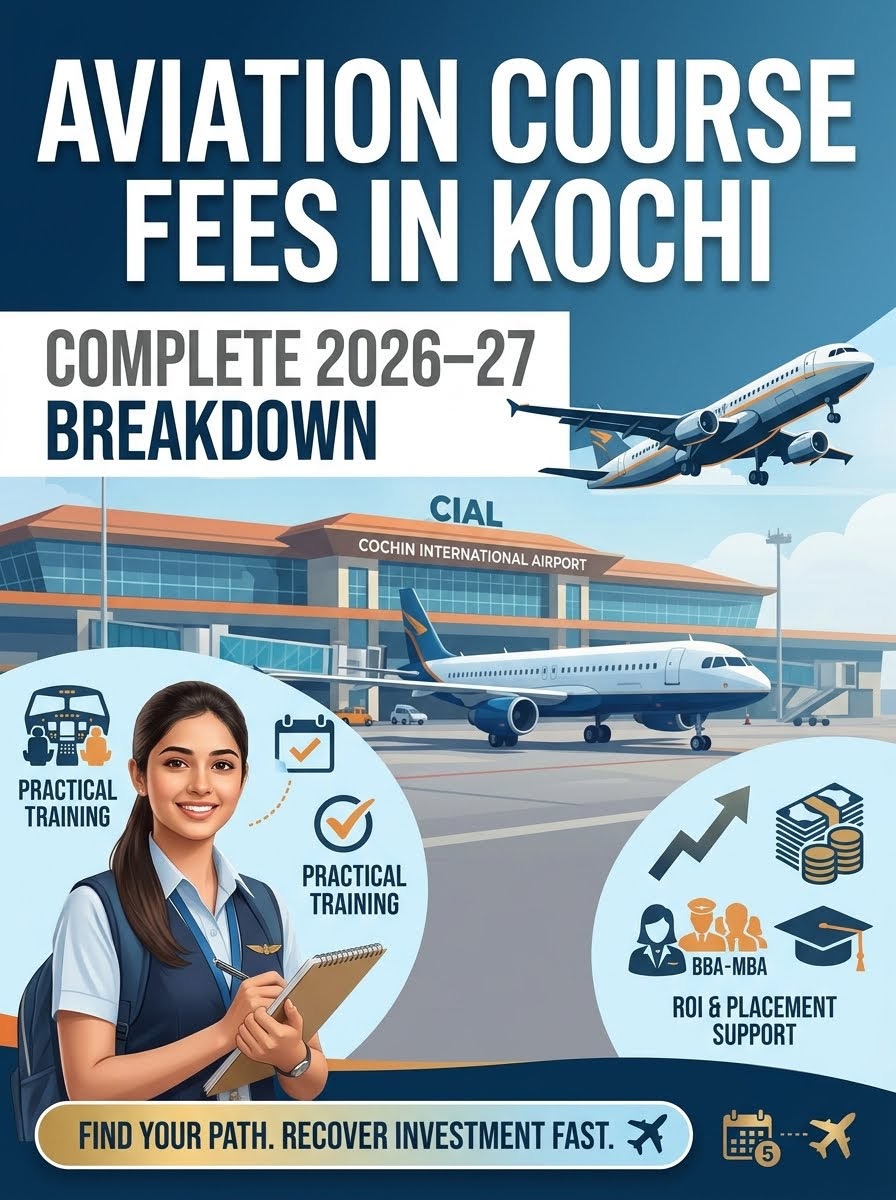
Aviation diploma fees in Kerala typically range from Rs. 60,000 to Rs. 2,50,000 depending on course duration, institute reputation, and infrastructure. A 6-month diploma will generally cost less than a 12-month programme. Always ask for a complete fee breakdown — including uniform, certification, and examination fees — before enrolling.
Q: Can a Kerala student get international airline placements after an aviation diploma?
Yes — international placements are achievable, particularly with Gulf carriers such as Air Arabia, flydubai, and Oman Air, which have historically recruited from Kerala-based aviation institutes.
The key factors are the institute’s industry connections, placement track record, practical training exposure, and strong personal presentation skills developed during the course.
For students targeting international roles, communication skills, grooming standards, and real-world interview preparation often play a more decisive role than affiliations alone.
Q: What is the difference between an aviation diploma and a BBA in Aviation?
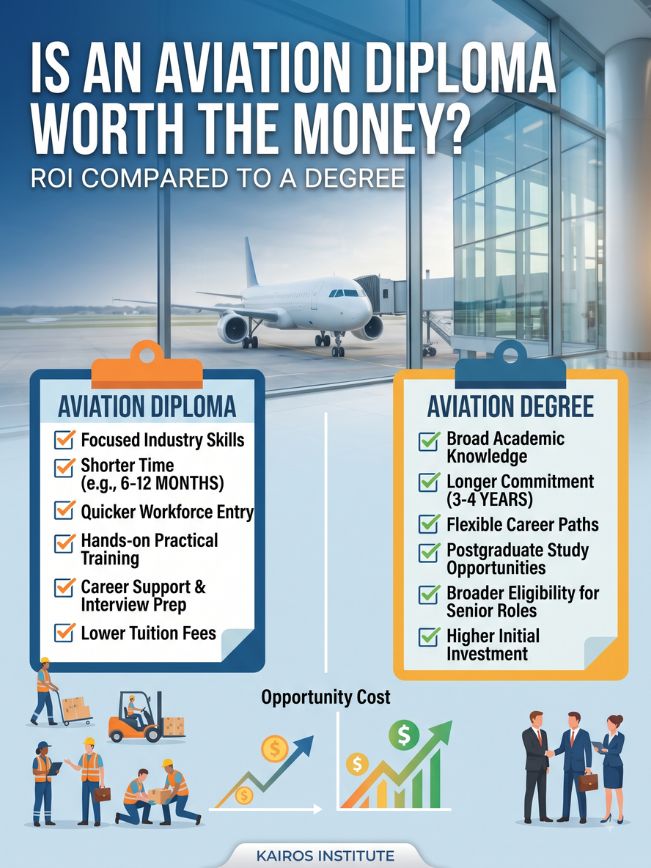
A diploma (6 to 12 months) focuses on specific operational skills and helps you enter the job market faster. A BBA in Aviation (3 years) combines a recognised undergraduate degree with aviation specialisation, giving you more career flexibility and eligibility for management-track roles. If your goal is immediate employment, a diploma is effective. If you want long-term career mobility into management or corporate aviation, the degree pathway is more valuable.
Final Thought: The Right Institute Is the One That Can Show, Not Just Tell
Every aviation institute in Kerala will tell you they have the best placements, the most experienced faculty, and the most modern infrastructure. Very few will show you the evidence.
Before you enrol anywhere, ask for placement records with airline names. Ask to meet a faculty member and hear about their industry background. Visit the campus and walk through the training areas. Ask to speak with a recent graduate.
If an institute hesitates on any of these requests, that hesitation is your answer.
If you are looking for an aviation institute in Kochi, Thodupuzha, or Bangalore that can answer all of these questions with confidence, Kairos Institute is ready to show you everything.
Popular Blogs



What Certifications Should Your Aviation Institute Have? A Complete Guide for Students and Parents in Kerala
Read More



How AI and Automation Are Changing Airport Jobs in 2026 — and What It Means for Your Career
Read More
What Is Virtual Reality Training in Aviation? How Kairos Institute Uses VR for Student Learning
Read More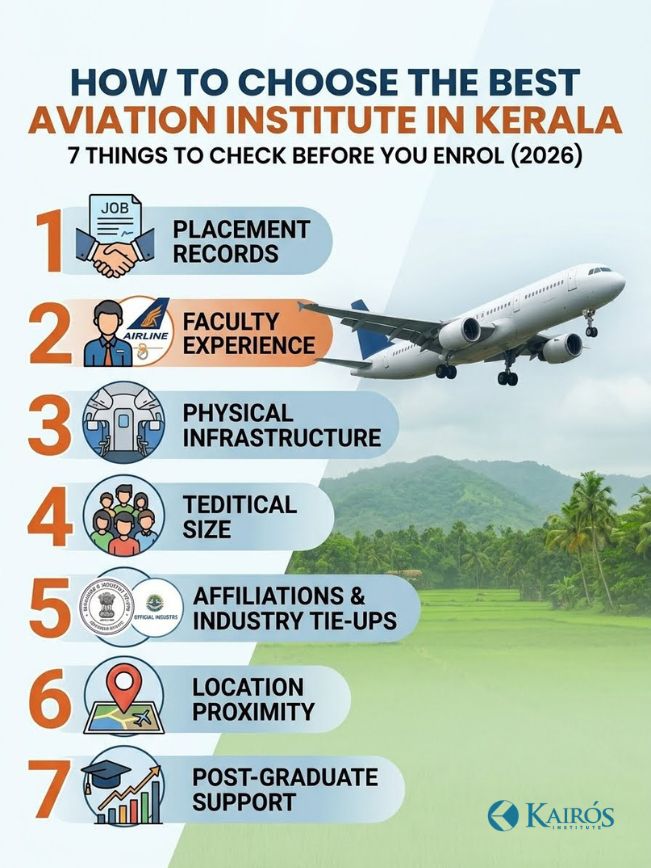
How to Choose the Best Aviation Institute in Kerala — 7 Things to Check Before You Enrol (2026)
Read More